
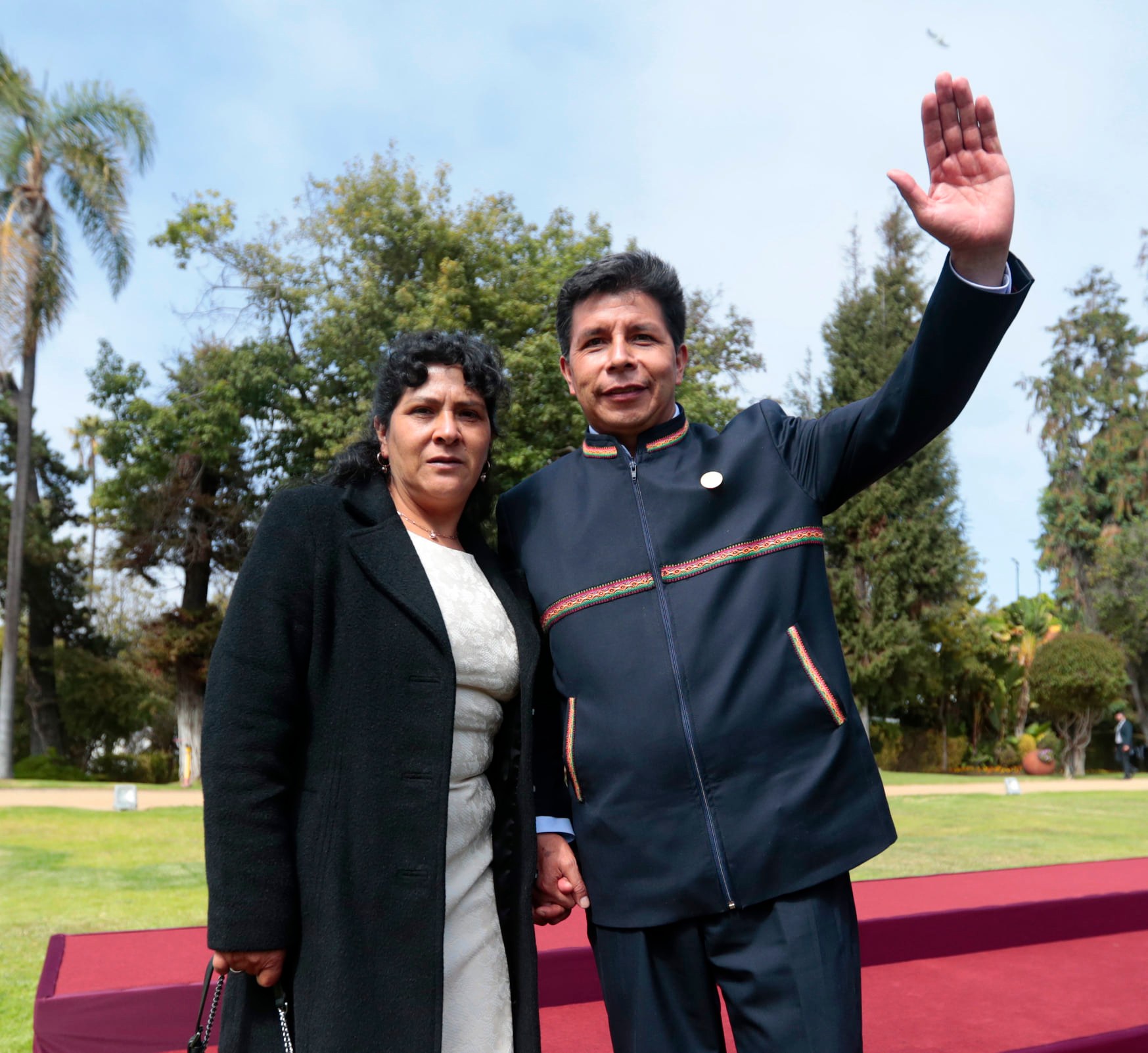
The President of Peru is the head of government and state, and personifies the Peruvian nation, is the head of the executive power and supreme head of the Peruvian Armed and Police Forces.
The current Constitutional President of the Republic, since July 28, 2021, is Pedro Castillo Terrones, who took office after winning the 2021 general elections.
The president exercises his functions from the Government House, located in the historic center of Lima, the capital of Peru.
The presidency of Peru is exercised for a period of 5 years without the possibility of immediate re-election. The change of president takes place in the Legislative Palace before the plenary session of the Congress of the Republic ordinarily every five years on July 28, except in exceptional circumstances, such as presidential vacancy.
It is its responsibility, as a generic mandate, to direct the general policy of the government and the administration of the State.
Although his role, title and significance have undergone changes throughout history, as well as his position and relations with the other actors of the national political organization, he has been and is the most prominent political figure.
The current Political Constitution of Peru, promulgated in 1993, establishes the requirements, rights and obligations that the President of the Republic must fulfill. As a public official he receives a monthly salary of S / 15,500.
Pedro Castillo Terrones
José Pedro Castillo Terrones (Puña, October 19, 1969) is a Peruvian politician, teacher and union leader. He is the current president of the Republic of Peru, a position he has held since July 28, 2021.
During his youth he was a patrolman and became a national leader of the Peruvian teachers. As a primary school teacher and president of the Fighting Committee of the regional bases of the Single Union of Education Workers of Peru (Sutep), he became the main leader in the 2017 teachers’ strike.
In politics, he was a member of the Cajamarca regional committee of Peru Possible, a party for which he unsuccessfully ran for mayor of Anguía in 2002. In 2021, he ran for the presidency of the republic for the Peru Libre political party.
He won first place in the first round with 18.92% of the votes and surpassed the leader of Fuerza Popular, Keiko Fujimori, with 50.13% of the votes.
Ideology of Pedro Castillo
Castillo has the intention to cede an outlet to the peruvian sea to Bolivia, which has cost him the rejection of broad sectors of society.
He is a socialist, populist and conservative in social aspects, and an ultra-conservative sector of the press describes him as extreme left for accepting principles of Marxism-Leninism declared in the ideology of the Free Peru party, although he defines himself as progressive and not Marxist. While he maintains leftist values on public spending and foreign policy, his social policy is conservative.
He has been against the gender approach in the school curriculum of students, the legalization of abortion, euthanasia and same-sex marriage