Ticket Sales to Machu Picchu 2025

The Ministry of Culture announces that starting on Thursday, December 19, 2024, the reservation and sale of tickets to visit the Inca City of Machu Picchu in 2025 will begin, through the State platform, tuboleto.cultura.pe

In this sense, agencies, tour operators and visitors in general will be able to access on that day, the tickets to enter during the visiting period between January 1 and 5, 2015. The payment time will be between 9:00 a.m. and 11:58 p.m. It should be noted that the indicated payment time applies exclusively to the first day of opening of reservations for each visiting period.

From the second day, the payment of the reservation will be made according to the current procedure. According to the established schedule, starting on January 3, 2025, tickets can be reserved and purchased for entry between January 6 and 31, 2025.

While on January 13, 2025, reservations will be available for the month of February 2025. On January 14, reservations and purchases will be available for March 2025.

The following day, tickets will be available for the month of April 2025. Meanwhile, on January 16, 2025, tickets can be purchased for the month of May, on January 17 for the month of June, and on January 20, for the month of July 2025.

Likewise, for the months of August to December 2025, reservations and sales will be available starting on January 21, 2025. This schedule is in compliance with Ministerial Resolution No. 043-2024-MC, which approves the entrance fees to Pre-Hispanic Real Estate, Museums and Museum Institutions for the Fiscal Year 2025, Single Rate Schedule for Non-Exclusive Services provided by the Ministry of Culture.

Schedule | VISITING PERIOD | RESERVATION AND PAYMENT DATE | PAYMENT TIME (*)

| From January 1 to 5, 2025 | Starting on 12/19/2024 | From 9:00 a.m. to 11:58 p.m.

|From January 6 to 31, 2025 | Starting on 01/03/2025

| February 2025 | Starting on 01/13/2025

| March 2025 | Starting on 01/14/2025 | April 2025

| From 01/15/2025 | May 2025 | From 01/16/2025

| June 2025 | From 01/17/2025 | July 2025 | From 01/20/2025

|August to December 2025 | From 01/21/2025

(*) The payment schedule indicated applies exclusively to the first day of opening of reservations for each visiting period. From the second day, the payment of the reservation will be made according to the current procedure.

Machu Picchu Load Capacity

We must remember that, through Ministerial Resolution No. 000404-2024-MC, a maximum capacity of 5,600 daily visitors is established for the Llaqta or Inca city of Machu Picchu during the year 2025, applicable on the following dates: January 1, April 17 to 20, June 19 to November 2, and December 30 to 31.

This measure is based on the Protocol for the management of visits to the Llaqta or Inca city of Machu Picchu, approved by Ministerial Resolution No. 000207-2024-MC, whose objective is to guarantee the protection and conservation of the archaeological heritage, as well as to offer a quality visitor experience during the months of high season for visitors.

It is important to note that, in the regular season, the daily access limit to Machu Picchu remains at 4,500 visitors. Customer Service Channel For more information, the Ministry of Culture offers the Customer Service Channel Tu boleto, a free service that is available from Monday to Sunday, including holidays, through the telephone line: from Peru (01) 321 5555 and from abroad +51 1 321 5555 or by email: tuboleto@cultura.gob.pe.

The Avocado Route, Peru’s Green Gold

The Peruvian avocado is one of the most emblematic products in the agro-export basket. Recognized worldwide for its quality and flavor, the South American country has established itself as the second largest exporter of avocados, only behind Mexico.

The avocado also stands out for its numerous health benefits and its growing presence in global gastronomy. One of the reasons why this day is celebrated is to make visible its great importance in food and to spread the many benefits it provides for people’s health.


Strong Avocado, Creamy Avocado

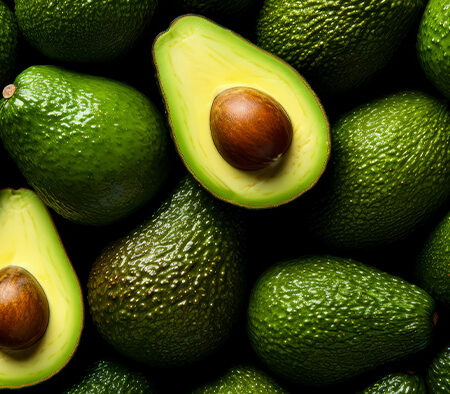
The Peruvian avocado is recognized for its high quality and unique flavor. Characterized by its creamy texture and dark green skin, this fruit stands out for its nutritious content, rich in vitamins E, C and K, as well as healthy fatty acids. It is ideal for various culinary preparations, from salads and sauces. Grown in the fertile valleys of Peru, its smooth, buttery flavor makes it a global favorite, exported to numerous countries.

Avocado production in Peru is concentrated mainly in the regions of La Libertad, Lima, Lambayeque and Ica, which represent 83% of the country’s productive hectares. In recent years, an increase has been observed in regions such as Huancavelica, Ayacucho and Cusco. 95% of the production of the Hass variety is destined for export, consolidating Peru in the international market.

Known as “green gold”, its harvest takes place throughout the year, with the highest production being recorded between the months of March and September. In addition, its use has been diversified, with the pulp being used for food production, while the seed is used in cosmetics to extract essential oils.


Hass Avocado

The Hass avocado has become a key ingredient in the production of various processed products, such as snacks, oils, sauces, dressings, smoothies, among others. This diversification in its application not only responds to a growing demand in the market, but also represents an important opportunity for innovation and business development for Peru.

Currently, there are more than 250 Peruvian companies that export the “Green Gold” to more than 48 countries around the world. Shipments of fresh avocados abroad totaled USD 963 million during 2023, according to PROMPERÚ .


Northern Green Gold

In Lambayeque, there are 76 certified production sites, spanning from Olmos to Zaña, reflecting the rich agricultural history of the region. La Libertad, on the other hand, stands out as a national leader in avocado production, with a 42% share, and is recognized as the first agro-exporting region of this fruit in Peru.

Farmers in these regions have inherited cultivation techniques that have been perfected over generations. Avocado is not only grown for trade; it also plays a crucial role in local festivities and cuisine. In La Libertad, producers receive training in Good Agricultural Practices (GAP), thus ensuring the quality of the fruit that reaches both national and international tables.


From The Sierra de Lima

In the Lima region, avocado production occurs mainly between May and September, although this delicious fruit can be found throughout the year. In Santa Eulalia, every April the Festival de la Palta Fuerte is held, an agro-tourism event that awards the best producer and the best avocado in the district.

This festival brings together 32 family farmers, who present their best crops. The award contests highlight the quality and creaminess of the avocado. In addition, a large culinary fair is held, where you can taste typical dishes such as noodles with avocado, garden rice with avocado and Santa Eulalia solterito.

One of the novelties of the festival is the “Miski Acopaya”, an avocado pisco sour, along with ice cream, cheesecake, strong avocado sigh and picarones with avocado honey.


Frozen Avocados: Conquering Markets

Currently, almost 9% of the total avocado production in Peru is destined for freezing, with the Hass variety being the most used for this purpose. The freezing process requires high technology to ensure that the fruit retains its freshness, texture and creaminess. This trend is gaining popularity due to the growing global demand for fresh frozen avocados, peeled, pitted and washed.

Peruvian Avocado and Gastronomy

The avocado has conquered a special place in Peruvian cuisine, present in a wide variety of dishes that are a sign of identity and regional pride.

Causa limeña: cold cake of mashed yellow potato seasoned with yellow chili and lemon, filled with avocado, chicken or tuna, and mayonnaise.

Avocado salad: Classic and delicious. In Moquegua, in 2022, the largest avocado salad in the world was prepared.

Fish tiradito with avocado: Thin fish fillets, marinated in lemon juice and chili, accompanied by slices of avocado.

Stuffed avocado: Halves of avocado stuffed with chicken salad, seafood, or vegetables, mixed with mayonnaise.

Avocado sauce: Combination of ripe avocados, tomatoes, onion, yellow chili, and lemon juice. It is recommended to serve with fried yucas, tequeños, or various meat and fish dishes. The specialized website Taste Atlas ranked it among the 50 best sauces in the world.

Street Food in Peru

Peru, a country that has conquered palates worldwide with its exquisite and varied cuisine, also has a great variety of street food.


The reason for its renown transcends the sophisticated restaurants to be located in the heart of its streets, where culinary tradition vibrates with the daily bustle of its cities and is that Peruvian street food stands out for its rich diversity and authenticity that captures the essence of the culture of the country.


From salchipapas and papas rellenas, the offering is as vast as it is appetizing. However, among all this culinary wealth, one dish has managed to especially capture the attention and favoritism of this platform: the beef heart anticucho. This dish, with its perfect combination of flavors and its venerable tradition, is established not only as a local delicacy, but as the ambassador of Peruvian street food in the eyes of the world.


How was street food born in Peru?

When the Peruvian wants to get ahead, he knows that it is a good option to sell food on the go, investing a low budget. They say that “when the need arises, ingenuity arrives”, and that is why tourists will find a great offer of food on the streets, a little bit of everything for all tastes and at a low price.


Anticuchos and Viscera


Anticuchos are beef hearts that have already been cleaned and opened to be marinated with a seasoning based on ají panca, garlic, yellow chili, pepper and vinegar, among others.

Then these pieces are embedded in sticks and placed on the grill. This is a corner tradition that was born in the streets and, although there are restaurants that offer anticucho as their flagship dish, Peruvians will always recommend going to the street to eat agachaditos.

The same thing happens with the organ meats, they are seasoned and put on the fire, so that they have that smoky touch, it is accompanied by parboiled potatoes and chili.


Picarones


Picaron is a dessert from yesteryear, a kind of donut but shaped like a nut. What marks its Peruvian DNA is that it contains pumpkin and sweet potato.

This is another traditional case and we can find it in avenues, parks, corners of popular avenues and outside churches. And although many restaurants have it on their menu, it is quite an experience to see how the dough is fried and how it is dipped in chancaca honey.

Plus, if you eat it on the street, you can always ask for more honey.


Choclo con queso y huevo duro


The combination of this dish is simply perfect! Choclo con queso is the best and cheapest dish you will find along the streets.


Mazamorra morada y arroz con leche

Mazamorra and arroz con leche are desserts from yesteryear and are always pot neighbors or go together in the same container. Because it is such a popular dish, you can also find it on the corners of busy avenues, parks, avenues or outside the churches of Lima.

Mazamorra comes from Peruvian purple corn, it is cooked and combined with cornstarch to give it thickness and some fruits are added for taste. Rice pudding is a cooking that also includes cinnamon and sugar.


Cachangas


It is a mixture of flour, salt, anise and sugar, and in Peru we can find it in different varieties as part of artisanal and regional baking. However, what is eaten on the streets is a fried food in the form of a pizza.


Huevitos de codorniz

Although it is not frequent, it is possible to see a cart full of quail eggs passing by in the markets or bus stops. They accompany it with boiled potatoes to eat immediately or they carry it in bags to put on the home table. These eggs are considered very beneficial, especially at breakfast time, since they have many nutritional benefits. It is a street delicacy.


Empanadas


When hunger strikes, some empanadas are always welcome to eat on the go. They are generally offered in a corner or in a small stall, I don’t assure you that you will always find them warm, but you will always find them plump enough.

The Peruvian loves Add lemon and chili to your empanada, so the seller will always have these concoctions at your disposal. The most classic empanadas are cheese and ham, meat and chicken, although some inventive people have invented several more fillings.


Humitas and tamales

We will find them formed as if they were little soldiers inside a basket or in a cart with wheels, some will be warm, others will be at room temperature.

Both humitas and tamales are made of corn or corn, the difference is that humitas have a sweet version with raisins or other fillings, but they all come from the same pot. In the mornings – especially on Sundays – there are saleswomen outside the bakeries, churches or inside the markets.


Churros


Churros are not exclusive to any country, although I must give credit to Mexicans for being the ones who consume it the most and who we have heard the most about.

This sweet is quite requested on the streets, whether it is glazed with sugar or the one with filling. We can find it in different ways: in a corner inside a display case illuminated by a spotlight whose mission is not to let the churros cool down. Other times they are stacked inside a tray that is carried on the shoulders of vendors, who go from one place to another taking advantage of the traffic to satisfy passers-by. And the third, which is the one I like the most, is in a cart where you can see its preparation process, from the moment of kneading to frying and glazing.


Ceviche in a wheelbarrow

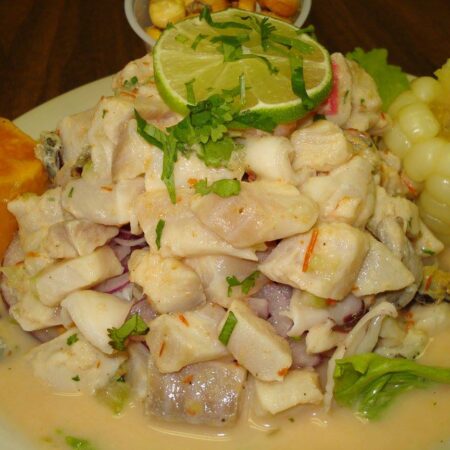
Ceviche is a very popular preparation and we will find many of the best seasonings coming from the street carts. Some prepare it on the spot, others have trays full of this preparation planned.

It is advisable to look at the hygiene of the stall to have a pleasant experience, since fish is a fairly delicate product.

The ceviche (fish in lemon and salt plus onion) is accompanied by canchita, mote, seafood chicharrón, sweet potato and extra chili.


Emollient and other drinks

The emollient is a concentrated drink of roasted barley, horsetail, linseed, alfalfa, plantain and lemon. The fact is that to obtain this preparation it is always necessary to boil everything for long hours. We find it every morning in the markets, busy avenues, parks and street corners.

This drink is restorative and, because it is hot, it contributes a lot in winter.

The merit of the master emollients is to enchant them with their recipe, since each one jealously guards the quantities that make their drink successful. In addition to the emollient, some stalls offer the famous “7 flours (wheat, barley, cañihua, kiwicha, corn and pea)”, “quinoa drink”, “oatmeal with milk (simply called quaker, in honor of the brand)”, among others.


Food 7 colors

This is serious stuff! The famous seven colors is a combination of seven types of food in a single dish: red noodles, huancaína, ceviche, chanfainita, arroz con pollo, causa, carapulcra and, if the cook feels like making more dishes, there will be more. where to choose from.

It is a highly requested option in large markets, and although some believe it is too much for the stomach, tourists may find it very curious and even fun to put together their plate with all the options of the day.


Papa Rellena

This dish is quite peculiar, because thanks to its shape it has become one of the favorite snacks. It is a potato dough plus oil and salt, this is given a round shape and filled with various stews, the most common are chicken and meat stew.

Finally, they are fried in plenty of oil so that they are crispy on the outside. Many street stalls offer them ready to go, but only some do the final frying process in front of the diner.


Chaufa al paso

Chaufa is a “chifa” (Peruvian-Chinese) restaurant dish based on rice, silao, chicken, Chinese onion and oriental vegetables. It is widely consumed in Peru and whose particular seasoning gives it the art of wok stir-frying. This dish is also eaten when passing a corner.

It is quite a show to see the chaufa rice sauté and, to achieve that smoky touch, the cart needs to have a small stove with a gas burner.


Sausages, sandwiches and hamburgers

Another way that many Peruvians found to get ahead is the sale of hamburgers, sandwiches and the famous salchipapas, which is a scramble of French fries with a hot hot dog and all its creams such as mayonnaise, mustard, ketchup, golf and olive cream.

All this junk food is made in a sandwich cart with infrastructure for frying potatoes to order and a griddle to make the hamburger. There are also spaces equipped for garnishes.

The Best Destinations to Enjoy Peru as a Couple

From the mountains in Cusco to the desert of Ica, Peru offers a variety of experiences to live as a couple. Find here “The Best Destinations to Enjoy Peru as a Couple”.

Traveling with that special person is an unforgettable experience. Before boarding, lovers usually look for destinations that offer the ideal environment for romance.

The variety of destinations in Peru is the perfect range to find the option that best suits the needs of the couple. From the mountains, which offer mountains and landscapes that leave you breathless, to the unpredictable Amazon jungle or the refreshing coast; Peru has it all. We share 5 incredible experiences that you can book to enjoy Peru as a couple.


See the sunrise on Lake Titicaca in Puno

Waking up and seeing the sunrise reflected in Lake Titicaca is an experience that deserves to be included on the 2024 travel list. Even more so, if it is a couple’s trip. Lake Titicaca, the highest navigable lake in the world, offers a unique opportunity for the traveler.

With its 3812 meters above sea level, touring it aboard a boat is to contemplate the immensity of its calm and cold waters. On that trip, its flora and fauna are discovered, as well as the legend that precedes it. It is said that Manco Cápac and Mama Ocllo emerged from the lake, who were sent by the Sun God to build the Inca Empire. That mystical energy that surrounds the Lake makes the trip an even more special experience.

To reach this wonder from Lima, you must take an air flight to Juliaca, a good entry point to Lake Titicaca.

In addition to touring the lake, you can visit the surrounding islands, Uros, Taquile and Amamantí. There local residents share their ways of life and you can experience experiential tourism.

To experience an unforgettable couple’s trip, it is recommended to stay in the area. Spend a night in front of Lake Titicaca and discover what Puno has to offer. S

unrise in front of the Lake, dining outdoors, strolling aboard a boat on Lake Titicaca promises to be a perfect atmosphere for romance. Currently there are numerous hotels on the Islands of Los Uros and Amamantí.


Enjoy the Sunset in Máncora

A trip to the beach is never lost. Even more so, if they are resorts with as much gastronomic and entertainment offer as Máncora. The paradise of palm trees and calm waters located in the department of Piura, welcomes tourists all year round thanks to its pleasant climate. To get there, you must take a flight from Lima to Piura or Tumbes, and continue the journey by car to the beach.

The offer of hotels for couples in Máncora grows every year. In these specialized venues to fan the flame of love, there are personalized experiences according to the needs of each couple. DCO is a boutique hotel located on Las Pocitas beach, ideal for couples because it has independent suites. In addition, the hotel offers experiences such as dinners on the beaches, breakfasts or lunches on the terraces of each suite, a spa for couples, among other activities.

Máncora offers different activities to enjoy for two. On the seashore you can go horseback riding as a couple to enjoy the unforgettable sunsets. In addition, the spa has become an ideal place to organize retreats and yoga classes for those who connect with their spirituality.


Glamping in Huacachina, Ica

Did you know that you can sleep with your partner in the middle of the desert? This storybook romantic getaway has become popular in recent years. Huacachina is a desert oasis located in the city of Ica. Sleeping among its dunes means spending a mystical night with the silence that only the desert knows how to offer.

To achieve this you must take the Panamericana Sur and travel by car to the city of Ica. From there, you can hire a travel agency that provides the Glamping service. Currently, numerous companies have packages to live the experience.

The experience will depend on the company hired, but a romantic night in the desert is usually offered with dinner by a private chef, a bottle of sparkling wine, a tent with a double bed and other elements for a great experience. In addition, some tours also consider tubular rides through the desert.

The experience promises to be one of the most romantic on this list.


Cruise for two through the Amazon

Another romantic experience that tops the 2024 travel list takes place in the Amazon jungle. Exploring the jungle on a luxury cruise with the ideal partner can become a priceless memory. To live this experience, you must reach the city of Iquitos, where there are companies that provide this type of services.

Delfin Amazon Cruises is one of these companies that allows you to explore the Pacaya Samiria national reserve. On the cruise, you can find rooms with large windows that allow you to enjoy the view. Through the boat you travel along the Amazon River while enjoying the flora and fauna.
. In this experience, couples can stay in a cabin in the middle of the mountains with views of the Nevado de Chicón, which is part of the Andes Mountains. Each cabin is set back from the other to offer privacy and tranquility to guests. The most popular suite features a queen bed, private bathroom, fire pit area and outdoor jacuzzi. The experience offers the opportunity to enjoy an afternoon in the jacuzzi in front of an invaluable landscape surrounded by local animals and with a plated dinner.

In addition, you can also go horseback riding in the beautiful wheat and barley growing pampas of Maras, picnic wine, cheese and painting with a view of the mountains of the Sacred Valley of the Incas, ATVs along the best alternative routes of Maras capturing landscapes. unique along the way, among other experiences.
Cruise for two through the Amazon

Another romantic experience that tops the 2024 travel list takes place in the Amazon jungle. Exploring the jungle on a luxury cruise with the ideal partner can become a priceless memory. To live this experience, you must reach the city of Iquitos, where there are companies that provide this type of services.

Delfin Amazon Cruises is one of these companies that allows you to explore the Pacaya Samiria national reserve. On the cruise, you can find rooms with large windows that allow you to enjoy the view. Through the boat you travel along the Amazon River while enjoying the flora and fauna in the surroundings.

In addition, in this experience you can do various activities such as exploring the rivers by kayak, visiting the villages, swimming with pink dolphins, riding a paddle board and going on night safaris.

Jacuzzi between mountains in Cusco

Cusco is always a good option. The capital of the Inca Empire is the perfect mix of culture, history, adventure and nature that every good traveler wants to try. Since the naming of Machu Picchu as one of the seven wonders of the modern world, the city has received hundreds of tourists seeking to discover the Inca citadel and, in the process, be surprised by other treasures in their path.

Among the novelties that Cusco offers are experiences in the mountains. At more than 3,000 meters above sea level, in the town of Maras there are eco-sustainable outdoor cabins that offer a dream experience.

Mountain View Experience combines nature with luxury. In this experience, couples can stay in a cabin in the middle of the mountains with views of the Nevado de Chicón, which is part of the Andes Mountains. Each cabin is set back from the other to offer privacy and tranquility to guests.

The most popular suite features a queen bed, private bathroom, fire pit area and outdoor jacuzzi. The experience offers the opportunity to enjoy an afternoon in the jacuzzi in front of an invaluable landscape surrounded by local animals and with a plated dinner.

In addition, you can also go horseback riding in the beautiful wheat and barley growing pampas of Maras, picnic wine, cheese and painting with a view of the mountains of the Sacred Valley of the Incas, ATVs along the best alternative routes of Maras capturing landscapes. unique along the way, among other experiences.

Top 10 Places to Visit in Peru

Discover the Top 10 places to visit in Peru” and you cannot miss during your trip to Peru. From the mysterious Valley of the Geysers in Tacna, to the Wonder of the World in Cusco, passing through the majesty of the Peruvian jungle.

The Valley of the Geysers in Tacna

Located at 4,400 meters above sea level in the Vilacota Maure Regional Conservation Area, in the province of Candarave, 4 hours from the city of Tacna, in southern Peru.
Famous destination for hosting 85 geysers or hot springs of volcanic origin with temperatures that exceed 86°C, and which form a natural setting from another planet.

How to get there from Lima

The trip from Lima to Tacna takes 22 hours by car and one hour and 45 minutes by plane. The only airline that offers this route is Latam Airlines. To get to the Valley of the Geysers you must do a trip to Vilacota – Maure for 4 hours by car.

What You Can’t Stop Seeing


Miculla Petroglyphs

Located at 26 km from the city of Tacna, there are the Miculla petroglyphs. Here you can see petroglyphs representing animals and people. Near the place, there is also a 65-meter-long suspension bridge.

Ite Swamp


Located at 95 km. From the city of Tacna, at the mouth of the Locumba River, is the second largest swamp in all of South America.

There you can see a large population of water birds such as the white heron and the red duck.

Machu Picchu

Located at 2445 meters above sea level in the homonymous district, in the province of Urubamba, in the department of Cusco.

Recognized as one of the wonders of the modern world and a World Heritage Site in 1983, Machu Picchu is the pride of Peru. The historic sanctuary was one of the most important religious, political and cultural centers of the Inca empire.


How to get there from Lima

To get to Cusco, you must take a flight of approximately 1 hour and 15 minutes. Once in the city of Cusco, you must travel for approximately two hours by bus or car to Ollantaytambo, where you take a two-hour train to the Inca citadel.


What you can’t stop seeing
Maras and Moray

The Maras salt mines are a group of three thousand natural salt wells. In the archaeological center of Moray there are circular terraces that were places of agricultural research in the time of the Incas. ATV rides can be done in the area.


Chinchero

Known for its textile centers, in the town of Chinchero you can see alpaca clothing using ancestral spinning and dyeing techniques. You can also visit its archaeological site.


Ollantaytambo

Administrative center and residence of the Inca nobility during the Inca Empire. Its main attraction is its fortress located on a hill, where you can see a series of stone constructions such as the Temple of the Sun, the Baños de la Ñusta and more.

Pacaya Samiria National Reserve

Pacaya Samiria is located in Iquitos, Loreto Department, in the jungle of Peru.
It is the largest terrestrial National Reserve in Peru and one of the largest floodplain forests in South America. This is a protected natural area that stands out for its biodiversity and geographical extension of 2,080,000 hectares.


How to get there from Lima

Take a plane from Lima to Iquitos for approximately 1 hour and 40 minutes. Then, travel by bus for two hours to Nauta and from there, a boat to the entrance of the reserve.


Monkey Island


Rescue center that aims to protect these animals. Rescue, rehabilitation and release of monkeys that have been victims of species trafficking.


Iquitos City

In the city of Iquitos you can walk through the Plaza and its streets, visit the Belén neighborhood or the Amazon Rescue Center (CREA).

Gocta Waterfall

It is located between the caserios de Cocachimba, San Pablo and Coca, in the district of Valera, province of Bongará in the department of Amazonas, northwest of Peru.
Famous destination for its majestic waterfall of more than 700 meters high (divided in two) surrounded by a dreamlike landscape. A natural Amazonian jewel that stands as one of the highest waterfalls in Peru.

How to get there from Lima


The trip from Lima to the city of Chachapoyas takes between 20 to 24 hours by land; and by air, 1 hour and a half. ATSA Airlines is the only airline that offers flights to this city. To get to the waterfall, you drive for 1 hour to Cocachimba or San Pablo and take a 2 to 3 hour tour (on foot or horseback).

What you can’t stop seeing

Kuelap Fortress


The ancient citadel of the Chachapoyas culture with imposing walls of up to 20 meters and more than 500 stone houses. You can appreciate it through the famous cable cars (minimum cost) and enter the archaeological complex with an entrance fee (20 soles for the general public).

Tambopata National Reserve

Its extension includes the districts of Tambopata and Inambari, located in the province of Tambopata in the department of Madre de Dios, in southern Peru.
Famous destination for its 274,690.00 hectares of vast biological diversity in its habitats. Approximately 648 species of birds, 108 species of mammals, 103 species of reptiles, 323 species of fish, 1,200 species of butterflies and 93 species of amphibians make up the fauna. While 1713 species of plants make up the wild flora.

How to get there from Lima


The trip from Lima to Tambopata takes approximately 30 hours. by land; and by air, 1 hour and 40 minutes to Puerto Maldonado. To get to the reserve, you travel by boat for 2 hours.

What you can’t stop seeing
Macaw clay licks


You can see the colorful parade of chucho and red macaws that arrive at the famous clay licks, large areas of salt and clay where these birds come to feed as part of their daily diet.


Lake Sandoval


With more than 3km in length, the lake is the ideal place to observe the local flora and fauna, highlighting the presence of otters and turtles.

Colca Canyon

The canyon is located within the Colca Valley in the province of Caylloma in the department of Arequipa, in southern Peru.
Famous destination for the imposing canyon measuring 4,160 meters in length that crowns it as one of the deepest and most mysterious in the world.

How to get there from Lima


The trip from Lima to Arequipa takes 16 hours by land; and by air, 1 hour and 25 minutes. Latam, Sky and JetSmart airlines offer flights to the city. From there, it is a 3-hour drive to Chivay and then a short one (10 minutes) to the canyon.


What you can’t stop seeing
Cruz del Condor Viewpoint


Strategic point from where you can observe the Colca Canyon and the imposing flight of the condors.
adventure sports
The vast landscape is also ideal for practicing extreme sports such as trekking, zip line, mountain biking and even canoeing on the Colca River.

Visit Nearby Towns


Sibayo, Yanque, Callalli, Coporaque and, of course, Chivay are some of the magical towns that can be visited along the way. You can do rural and gastronomic tourism and enjoy local activities and customs.

Visit Churches


Religious tourism visiting the Church of the Immaculate Conception (Yanque) and the Church of Santa Ana (Maca). An unmissable route during the excursion to the Colca Canyon.

Uros floating islands

Located at approximately 3,815 meters above sea level, the floating islands of the Uros lie west of Lake Titicaca, 7 km northeast of the city of Puno in the department of the same name, southeast of Peru.

Famous destination for the impressive complex of islands built from reeds that float on Lake Titicaca, one of the largest and highest in South America.

How to get there from Lima

The trip from Lima to Puno takes 21 hours by land; and by air, 1 hour and 35 minutes. From there, you will travel by car or taxi to the city of Puno for 45 minutes.

What you can’t stop seeing

Taquile Island

Taquile offers colorful textiles made by the local community itself. In addition, you can walk the trails that will take you to the Inca terraces and ruins, where you can appreciate the old architecture and at the same time enjoy the great view of the town and the lake.

Amantani Island

It is considered an attractive place for both ecotourism and archaeological and experiential tourism, It is very famous among tourists looking for an experience beyond the city.

Puno City

Located on the banks of the Titicaca River, the capital has various tourist attractions such as the Cathedral Basilica of Puno, the Balcón del Conde de Lemos, the Deustua Arch and more.

Cutimbo archaeological complex

A pre-Hispanic mausoleum southwest of Lake Titicaca. It has cave paintings, funerary towers and buildings made of stones that are more than 8 thousand years old.