
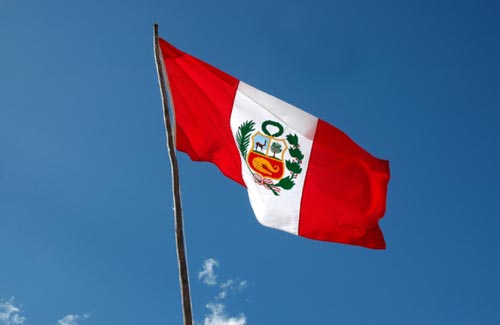
Did you know that the red and white colors that make up the plumage of the parihuana bird served as inspiration for the creation of the flag of Peru? Among the many versions that exist about the origin of this banner, the most accepted comes from a story written by the Peruvian essayist Abraham Valdelomar whose main protagonist is the Argentine liberator, Don José de San Martín.
Next, he learns more about this revealing story that marked the birth of the first flag of Peru and also discovers about this emblematic bird, which is part of the great biodiversity that this country has.
A Vision in Full Color
Called The Dream of San Martín, the story of Valdelomar narrates the events after the landing of the liberating expedition under the command of the Argentine general in the Bay of Paracas, which occurred on September 8, 1820. The story goes that, during the moment of rest of the army, San Martín decided to rest in the shade of a palm tree while contemplating the coastal landscape and thinking about his plans for freedom. Exhausted by the trip, he succumbed to sleep while imagining what the flag of Peru should be like.
Upon waking up, he glimpsed in the sky a flock of birds whose colorful plumage, combining white and reddish tones, powerfully caught his attention: they were the parihuanas -migratory bird from the central region of the Andes-. Observing them flying over the horizon, each of which, forming a flag, the liberator was impressed by the wonderful scene.
According to the story, San Martín stood up and asked the lieutenants if they also saw the group of birds flying through the sky, to which they responded positively; one of them even commented: “it looks like a flag”. “Indeed,” said the Argentine general, adding: “it is the flag of freedom, the one we have come to conquer.”
After the dialogue, the parihuanas -also known as flamencos- rose, losing themselves in the clouds. A month later, on October 21, the first flag of Peru inspired by the colors red and white was officially created.
The Flag of Peru Through the Time
The first Peruvian banner was divided by diagonal lines made up of four fields: two white at the top and bottom, and two red at the sides. In the center was an oval laurel wreath, and within it a sun that emerged over three mountains accompanied by a calm sea.
Five months after the proclamation of the independence of Peru -which occurred on July 28, 1821-, the flag was modified as a result of its difficult manufacturing process. The new design, by the Marquis of Torre Tagle, who replaced San Martín after a trip to Guayaquil, was made up of a transverse white stripe surrounded by two red ones of the same width, with a sun in the center. However, the obvious resemblance to the Spanish flag caused confusion, so it was modified again.
Later, on May 31, 1822, it was established that the Peruvian banner is made up of three vertical bands: red at the ends and white in the center, including a reddish sun. Three years later, on February 25, 1825, the image of the sun was changed to that of the brand new coat of arms made up of a vicuña, the quinoa tree and the cornucopia. This design, finally, is the one that remained officially and remains to this day.
The Flamingo as a Symbol of Inspiration
Belonging to the high Andean flamingo species, this beautiful bird spends most of its time migrating between the Andes and coastal areas, generally being seen in wetlands, freshwater lakes, estuaries and river mouths. It reaches up to a meter and a half in height and its great eye-catcher is, without a doubt, the unique combination of pink and white tones that make up its plumage.
If you want to appreciate it in all its splendor, the Paracas National Reserve, located in the Ica region, is considered one of the best areas in Peru for sighting this bird and many more, including the booby, the guanay and the pelican. .