Safe Travels: Peru, a Safe Tourist Destination

To feel the magic of nature again, it is getting closer and closer! Peru, became the third safe tourist destination in Latin America facing the COVID19. The “Safe Travels” seal was delivered to the Cusco and national authorities in the citadel of Machupicchu in Cusco.

The WTTC created the “Safe Travels” Seal with the aim of contributing to the responsible and safe reopening of tourism, once the local authorities determine that the conditions exist for it. For this reason, Peru developed a set of protocols designed under the guidelines of the World Health Organization (WHO) and the Center for Disease Control and Prevention (CDC). This seal also has the backing of the World Tourism Organization (UNWTO) and more than 200 CEOs of the main business groups in the sector around the world.

The Tourism Minister of Peru Rocío Barrios highlighted the importance for Peru of having obtained the “Safe Travels” Seal, which shows that the Peruvian government is fully committed to the tourism sector and its reactivation. She added that the biosafety protocols issued by the Peruvian Executive and that involve the tourism sector have been evaluated by WTTC professionals and have their approval, this task has been fully accomplished, which allows our country to have security standards health in world-class tourism.

“Tourism is the economic activity that has suffered the greatest blow from the coronavirus pandemic. For this reason, for its reactivation, we want to offer visitors the best possible travel experience, with quality tourist destinations and services and complying with strict biosecurity protocols. We have the commitment of the public and private sector. We are going to return, it is time ”, said the minister. It is important to mention that from now on, each region of Peru may request the use of the seal from Mincetur and Cenfotur will evaluate its granting.

No schema found.

Peruvian Paso Horses

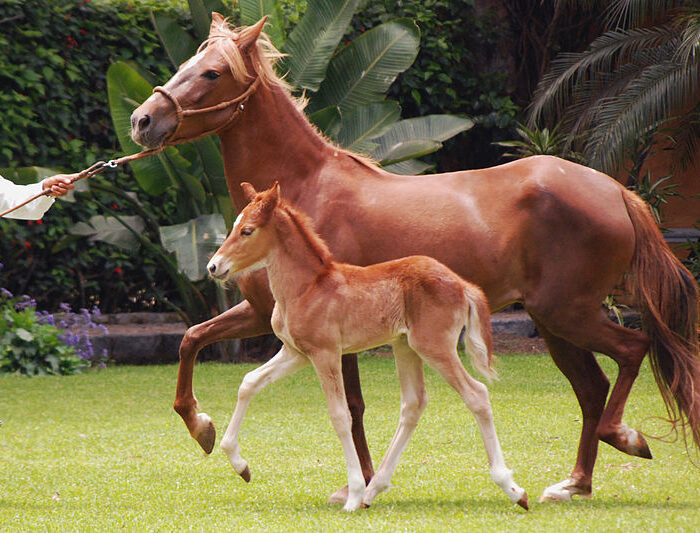
The Peruvian Paso Horses or peruvian horse is one of the most outstanding horse breeds of light saddle horse known for its smooth ride. This breed, typical of the regions of northern Peru, is protected by Decree Law 25919, promulgated on November 28, 1992.


In order to determine its history it is necessary to go back to what is believed to have been its predecessor, the Spanish horse from Andalusia, introduced to Peru during the time of the Conquest and the first stage of the Colony.
At first this breed was an indefatigable worker in the country, used as a work tool in agriculture and ranching. It served as a means of transport for riders on the haciendas of the northern coast of Peru. The subsequent stabilization of the breed took about four centuries, as a result of cross-breeding, selection and improvement.


Its morphology is characterized by being compact and muscular, wide and deep; elongated and strong limbs, a flat head and robust neck.
The thing that makes this breed different from other types of horses is the type of gait it employs to move. This is undoubtedly the most fascinating aspect.

Most horses move diagonally. In the case of the Paso horse it has a lateral gait. Nevertheless, there are different rhythms and speeds that give rise to different types or gaits, such as the catlike gait, the ambling gait, the staccato gait or the pounding gait. In these gaits the horse has a single and exceptional horizontal balance, which makes it pleasant to ride. Its smooth gait is undoubtedly one of the fundamental and best appreciated virtues of this breed.


The National Association of Peruvian Paso Breeders and Owners (ANCPCPP) is officially recognized nationally and internationally, responsible for the breeding, selection, evaluation, conservation and diffusion of our Paso horse.

Peruvian Gastronomy

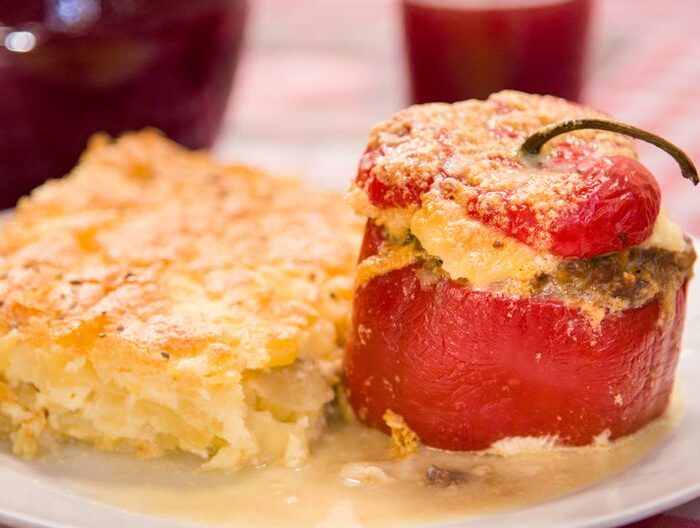
Peruvian gastronomy and cuisine is considered among the best in the world, inherited its innovation, mix and flavors from Peru’s history. Its culinary fusion developed over a long process of cultural exchange between the Spanish, Africans, Chinese, Japanese and Italians,among others. The dishes became more and more varied as races mixed and migrants landed at the port of Callao.
This fusion gives rise to dishes like the unique anticucho de corazón (skewered cow heart), tacu-tacu stew and carapulcra, dishes which have African heritage. Nutritious pastas arrived along with Italian migrants, whose adaptations have resulted in traditional dishes like green or red pasta. Ceviche.
Peruvian’s emblematic dish, emerged from a fusion with Japanese cuisine.
Lastly, the trend of Novo-Andean cuisine boasts indigenous foods worthy of the most elegant settings, reclaiming the national flavor that is such an important part of our identity.


Peruvian Gastronomy and Cuisine

Peruvian Cuisine reflects the country’s history, with a variety that is unique in the world.
We find dishes that sweeten our palates in every corner of Peru.
The cuisines of Lima, the North Coast, the Amazon, Arequipa, the Andes and Novo-Andean cuisine are waiting for you.

Amazonian Cuisine


Food from the Peruvian Amazon not only entices with its exotic dishes, but also attracts travelers with its great variety of delicacies such as beef, poultry, fish, mutton and pork.

It also offers other examples of Pachamama’s abundance, such as majaz, with its lean meat and delicious flavor, or plantains, used as a main ingredient in many recipes.
And what better companion for this tantalizing food than the fresh juice of countless kinds of fruit, or other drinks, such as masato guaranteed to pamper the palate of our most indulged visitors.

Loreto, Ucayali, San Martín and Madre de Dios


Food from eastern Peru is exotic. The biodiversity of its resources seems infinite. Chonta or palm heart, harvested from palm trees, is an important element of Amazonian cooking and is used to make salads.
The plantain is another key ingredient in Amazonian food. It is used to prepare tacacho, which is often served with pork cracklings or dried pork.
Juanes, pieces of chicken packed in cooked rice and wrapped in bijao leaves to cook; roast picuro, a species similar to the guinea pig; apinchado, cuts of pork stewed with peanuts and corn; andpatarashca, fish steamed in leaves in hot coals, are all examples of the flavors proffered by Amazonian dishes.
Juanes, pieces of chicken packed in cooked rice and wrapped in banana leaves to be lightly roasted; roast picuro, a species similar to the guinea pig; apinchado, cuts of pork stewed with peanuts and corn; and patarashca, fish steamed in leaves in hot coals, are all examples of the varied flavors proffered by Amazonian dishes.
Noteworthy soups include inchicapi, chicken prepared with peanuts, cilantro and cassava, and carachama soup, made from fish and accompanied with plantains and cilantro.
When it comes to drinks, the Amazon offers remarkable fresh juices made from countless types of fruit, such as aguajina and cocona, as well as concoctions like masato or chuchuhuasi, which is alcoholic, or uvachado, a fermented grape beverage, and chapo, prepared with banana and/or milk.


Andean Cuisine

The Peruvian mountains are synonymous with variety. Andean cuisine abounds with stews, soups, meats, and exquisite desserts made from corn, milk and fruits.
Combining the high nutritional value of the Andean ingredients in a traditional earthen pot over a wood fire to create the most delicious dishes. Chicha corn beer was the traditional beverage of the ancient inhabitants of the Andes, and the tradition still lives on today.
Come to Peru and taste the Peruvian Gastronomy in the differents regions of Peru.

Myths About Machu Picchu

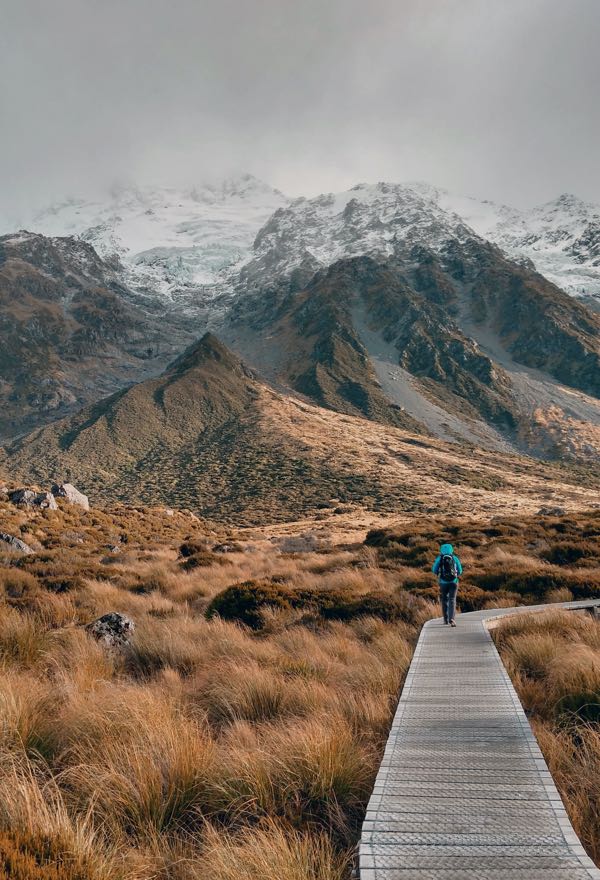
Between the cloud forests and mountainous landscapes, the ancient Inca citadel of Machu Picchu rises between the Andes. It is one of the most visited places of Peru and in the world. But the legends and myths about Machu Picchu do not always correspond to reality.

In the Sacred Valley of the Incas, the famous ruins captivate the interest of visitors from all over the planet. Many people wonder if everything they hear about “the lost city” is true.


Who discovered Machu Picchu?

It is said that the American explorer Hiram Bingham “discovered” the ancient citadel of the Incas. In July, 107 years of this event were celebrated.
According to many documented history books, Machu Picchu was discovered by Hiram Bingham in 1911. But Machu Picchu was discovered in 1902 by a breeder who lived on the banks of the Vilcanota River, Melchor Arteaga.
We can say that Bingham studied the place, but it is not for his discovery. When he arrived, there were people who talked him about the place.
However, he has organized an entire interdisciplinary expedition and has done a lot of research of the archaeological park of Machu Picchu.
Bingham also played an important role in drawing international attention to the archaeological site.


Why was it built on the top of a mountain?

Several legends explain why it was placed up there: the Inca Pachacutec had built after defeating his enemies, it was a sacred place of cults to the Sun.
Machu Picchu was built at more than 2,400 meters of altitude in a natural viewpoint of the Peruvian Andes and the Amazon basin. They may have chosen this location because of its geographical importance.
Possibbly the Incas, before building the citadel, were doing a research. For them, the hills are “Apus” (gods), and the district of Machu Picchu is surrounded by three Apus, protected by these mountains.
In addition, it was in a high place and they were in constant confrontation with the Chanca culture. So they built in the high areas to better defend themselves.
Recent studies have shown that Machu Picchu was the place from which the Incas administered their empire and it was therefore logical that it was at the highest point in terms of military strategy.


How did Machu Picchu stay so well preserved for so long?


The Inca walls and buildings of Machu Picchu are practically intact, with the exception of the roofs, which have disappeared over the years and because of heavy rains.


Five centuries have passed, how did Machu Picchu manage to be so well preserved?


The construction of Machu Picchu is a testament to the remarkable techniques used by the Incas.
The cultivated terraces (a vast network of stepped platforms) were very important for their preservation because they served as a drainage system, so the whole citadel remained intact and also thanks to the light tilt and shape of walls.
Machu Picchu even survived two earthquakes in Cusco (1650 and 1950) that destroyed colonial buildings, but not Inca.
But there is another reason: “When the Spaniards arrived at an archaeological site, their intention was to destroy, but the Spaniards did not arrive at Machu Picchu, which is why it remained so well preserved.


The Spanish could not enter to Machu Picchu with their mules or their horses, because the Emperor Manco Inca had destroyed all the roads that led to Machu Picchu, or at least the parts most difficult to cross when he retired in 1539.
In all these years, giant trees grew up, so Bingham found an abandoned village that remained intact behind these trees. This vegetation and its isolation “guaranteed the preservation of its architecture.


Is Machu Picchu in danger of disappearing?

Some press reports say that climate change and excessive tourism could make Machu Picchu disappear and “deteriorate at a rate never seen before”.
The people of Cusco, the Peruvian state and the world have the responsibility of keeping alive this world heritage. Not only to generate a beautiful speech, but also so that it is always present for future generations and that it makes no sense to ask this question.
In addition, UNESCO specialist, said that the Peruvian authorities “are responsible for the protection of Machu Picchu and are continually working to mitigate the potential impacts of tourism, natural disasters and the effects of climate change. “.
Although it is in an excellent state of conservation, it is essential to put in place an adequate protection policy in the medium and long term to counter these threats.
Two years ago, a group of Korean geologists came in and checked the movement points and the sliding of the walls. They said there was a detachment and a separation of 0.5 millimeter because of the number of tourists who visited it and constant rains, so they recommended that access be limited to tourists in certain places. That’s the reason why in the Intihuatana area, where you can only take the picture and move quickly.

Peru Fruits

Peru is one of the countries with a varity of plants and animals. Peru fruits, vegetables and fish, a land and sea paradise that provides some of the most complete food.

Lucuma:

The delicious lucuma can only be found in Peru

The main health benefits:

  • It provides carbohydrates, vitamins and minerals.
  • It contains beta-carotene, an antioxidant that delays aging.
  • It decreases the chance of heart attacks.
  • It prevents anemia.

Camu Camu:

The red jewel of the Amazon, it is high in vitamin C, containing even more than food with high concentrations of ascorbic acid.

Here are some of its main health benefits:

  • It strengthens the immune system, skin and eyes.
  • It provides vitamin C
  • This fruit promotes collagen growth
  • It is also an anti-oxidant
  • Detoxification of the liver, helping to eliminate toxins

Aguaymanto:

The aguaymanto is considered one of the five healthiest foods produced in Peru. A powerful antioxidant, high in vitamins A, B and C.

Here are some of its main health benefits:

  • It provides vitamin C content
  • It contains antioxidants, perfect for delaying aging and healing wounds.
  • It improves the immune system and increases the production of red blood cells.
  • It corrects cardiovascular function and acts as a natural tranquilizer.

Chirimoya:

Chirimoya looks like a tropical fruit, like banana or pineapple, but this product couldn’t be further from the Caribbean. It grows around 5,000 feet above sea level, on the slopes of the Andes mountain range.

Here are some of its main health benefits:

  • It is high in fiber, vitamin B and potassium.
  • It is a good source of Vitamin C
  • It acts as a powerful antioxidant, protecting our cells from oxidation.

Machu Picchu Informations

Find Machu Picchu Informations! Did you know Machu Picchu is a 15th-century Inca citadel situated on a mountain ridge at 2,430 metres above sea level?

It is located in the Cusco Region, in Machupicchu District in Peru, above the Sacred Valley, which is located at 80 kilometres northwest of Cuzco city and through which the Urubamba River flows.

Most archaeologists believe that Machu Picchu was constructed as an estate for the Inca Pachacutec(1438–1472). Machu Picchu Citadel is the most familiar icon of Inca civilization.

The Incas built the estate around 1450 but abandoned it a century later at the time of the Spanish Conquest. Although known locally, it was not known to the Spanish during the colonial period and remained unknown to the outside world until American historian Hiram Bingham brought it to international attention in 1911.

Machu Picchu was declared a Peruvian Historic Sanctuary in 1981 and a UNESCO World Heritage Site in 1983. In 2007, Machu Picchu was voted one of the New Seven Wonders of the World in a worldwide Internet poll.

Machu Picchu Informations: Weather


Machu Picchu is warm and humid during the day and fresh at night. The temperature ranges between 12ºC and 24ºC.

Generally this site is rainy especially between November and March.

Rains and Humidity


From November to March is the rainy season in Machu Picchu, while between April to November is the dry shiny season.

Machu Picchu has part of the Amazon jungle, and the rains are present in all the seasons. In the hottest days it is possible to achieve approximately 26° Celsius, in the coldest early mornings in June and July the temperature can drop to -2 °C. Its annual average temperature is 16 ° C.

It’s really easy to difference between two seasons: the rainy season (November to March) visitors are recommended to bring appropriate clothing and during the strong sun season (April to October), with a notable temperature increase.

The best months to visit Machu Picchu are May to October. Generally in Machu Picchu it is hot during the day and cold at night.

The tourist must be prepared, because the weather has fluctuations.

The ideal thing is carry a backpack,a sweater of wool, a jacket.

During the day the tourist can use a t-shirt and a comfortable pair of pants. In the dry season (May- November) the sun makes us wear sunglasses, a hat and sun block.

Machu Picchu New Entrance Rules


Peru’s Minister of Culture issued new rules governing all visits to the Machu Picchu Sanctuary.

The rules went into effect July 1, 2017, but have since been updated, which is reflected in this post. The biggest changes of note are:

Visits will now be more strictly timed (at four hours in maximum duration).

No re-entry will be allowed without securing a second permit.

Visitors must enter with a guide on their first visit.

Split Entrance Times


According to the new rules, Machu Picchu will be visited in 2 sessions. The new rules were going to come into operation on July 1st of 2017.

It operates in the following way: Morning session: 6 am – 12 pm Afternoon session: 12 pm – 5:30 pm Remember that readmittance is not permitted once visitors have left the site.

The major difference between the morning and afternoon sessions is that admission is more controlled in the morning.

Three established circuits in Machu Picchu


In the new rules, the government has established 3 circuits for visitors to Machu Picchu.

Visitors must decide which route they will take upon arrival to Machu Picchu with their expert guides.

This decision will depend on the visitors’ interests and physical conditions. Some details about the circuits in Machu Picchu are as follows:

Circuit 1.- Is the most complete route, and the most highly recommended one.

It requires you to be a in good physical condition. first takes you to the upper-sector of the citadel where you will have the best view of Machu Picchu itself, and then it goes through the most beautiful and important buildings.

Circuits 2 u0026amp; 3.- Visit the mid and lower-sectors, and are more suitable for those who want a more relaxing visit. Still, they both take you through beautiful places.

Why are there Alternative Circuits?


Find the best Machu Picchu informations related to alternative circuits:

The alternative circuits are open to Machu Picchu visitors in order to give them some extra options and diversify the hikes.

This also helps reduce crowding in the citadel.


Huayna Picchu Mountain

Huayna Picchu Mountain stands behind Machu Picchu. The views from the top are spectacular, and it only takes 45 minutes to go each way, but the route is quite steep.

If you are interested in this experience, you need to book this in advance.

Also, we highly recommend climbing Huayna Picchu with the second group which is scheduled for 10am because the views during this time are so much better.

This ticket is in combination with the general Machu Picchu entrance ticket; it cannot be purchased separately.

According to the new rules, all visitors to Huayna Picchu need to add 2 extra hours (until 2pm) so that they will have enough time to explore Machu Picchu and hike the mountain.

First entrance: 7 am – 8 am
Second entrance: 10 am – 11 am

Machu Picchu Mountain


Machu Picchu mountain stands just to the left of the citadel.

This climb takes about a total of 2 hours to go up and down. The view from the top is absolutely phenomenal, but it needs to be booked in advance.

This ticket must be purchased in combination with the general Machu Picchu entrance ticket; it cannot be purchased separately.

According to the new rules, all visitors to Machu Picchu Mountain will have an extra 3 hours (until 3pm) so that they will have enough time to explore Machu Picchu and the mountain.

First entrance: 7 am – 8 am
Second entrance: 9 am – 10 am


The Sun Gate

The hike up to the Sun Gate is another option. It’s the entrance that hikers on the Classic Inca Trail enter through in order to arrive to Machu Picchu.

It takes 1 hour to hike and is free and available to all. According to the new rules, it can be visited during the morning session or in the afternoon session.

It is still unsure if the government will give at least 1 hour to that people who want to do this extra hike.

Some important Rules that you should consider when you visit Machu Picchu
We really want to provide you Machu Picchu information, you need to know the most important rules that should be taken into consideration so as to avoid any trouble when you are visiting Machu Picchu.

Any backpacks that are more than 26 liters are not permitted during the tour and must be placed in storage (near the entrance).
It is prohibited to enter with food.
It is prohibited to enter with alcoholic beverages.
It is prohibited to enter with umbrellas (hats, ponchos, and raincoats are permitted).
It is prohibited to enter with photographic tripods or any type of camera stand/support. This is only permitted with pre-authorization and the appropriate permit.
It is prohibited to enter with any musical instruments, including megaphones and speakers.
It is prohibited to enter with high-heeled shoes or any shoe with a hard sole. Only soft soles are permitted (like those found in training shoes or walking shoes/boots).
It is prohibited to enter with children’s strollers or prams. Only strap on baby/child carriers are permitted.
It is prohibited to climb or lean on walls or any part of the citadel.
It is prohibited to touch, move or remove any lithic items / structures.
It is prohibited to enter with walking sticks that contain a metal or hard point. Only elderly people and physically-disable people are permitted to enter with a walking stick with a rubber tip.
It is prohibited to get naked, change clothing, lie down, run and/or jump.
It is prohibited to make loud noises, applaud, shout, whistle and sing. The tranquility and character of Machu Picchu must be maintained at all times.
It is prohibited to smoke or use an electronic cigarette.
It is prohibited to feed the resident or wild animals.
It is prohibited to paraglide and to fly any type of drone or small aircraft.
For Buying Machu Picchu Tickets, please visit:

Ticket Machu Picchu

Inti Raymi

Inti Raymi is the most amazing Inca celebration, this ceremony takes place every year on June 24th in Sacsayhuaman fortress and coincides with the winter solstice and harvest time.


The Festival of the Sun


Inti Raymi is presided over by the Inca and his entourage. They represent the most lavish tribute and worship of the sun. After the event, a presentation of music and dance of the four sides of the Tawantinsuyo is offered.
In 1944, a historical reconstruction of the Inti Raymi was directed by Faustino Espinoza Navarro and indigenous actors.
The first reconstruction was based largely on the chronicles of Garcilaso de la Vega and referred only to the religious ceremony.
Since 1944, an annual theatrical representation of the Inti Raymi has been taking place at Saksaywaman on June 24, two kilometers from the original site of celebration in central Cusco. It attracts thousands of tourists and local visitors.
Inti Raymi is still celebrated in indigenous cultures throughout the Andes.
Celebrations involve music, wearing of colorful costumes (most notable the woven aya huma mask), and the sharing of food. In many parts of the Andes though, this celebration has also been connected to the western Catholic festivals of Saint John the Baptist, which falls on the day after the northern solstice (June 21).

Inti Raymi: The Sun Festival

This festival takes place on June 24th of each year in Cusco, Peru. Before the arrival of the Spaniards in Peru in 1532, the Inti Raymi was the most important holiday of the Inca Empire, during which the sovereign, son of the Sun, thanked his father for the past agricultural year and asked for clemency for the news to come.
This event took place during the winter solstice, the shortest day of the year thus marking the beginning of a new cycle. The festivities were banned in 1572.
They ceased to be celebrated in public, but it is thought that they continued to be secretly. It was in 1944 that the party was brought up to date in the form of a pageant.
The performance begins in front of the Qorikancha (Temple of the Sun) around 8:30 am: hundreds of dancers, playing the inhabitants of the four Suyu (parts) of the empire, present themselves to the public
Then the Inca appears at the top of the temple. He leaves then with his wife the Qoya and goes to the Place d’Armes, where he arrives around 11am. From there, the actors go up to Saqsayhuamán where the last part of the show takes place, from 13h30 to 16h approximately.
Where to see The Inti Raymi
The representation in the city center of Cusco is free, and therefore very busy.
It is therefore advisable to visit the premises early. The access to Saqsayhuamán being totally blocked at the beginning of the afternoon, the easiest way is to go there on foot.
The entry to the stands is not free (between 90 and 130 USD depending on the location).

Peru Wildlife Observation

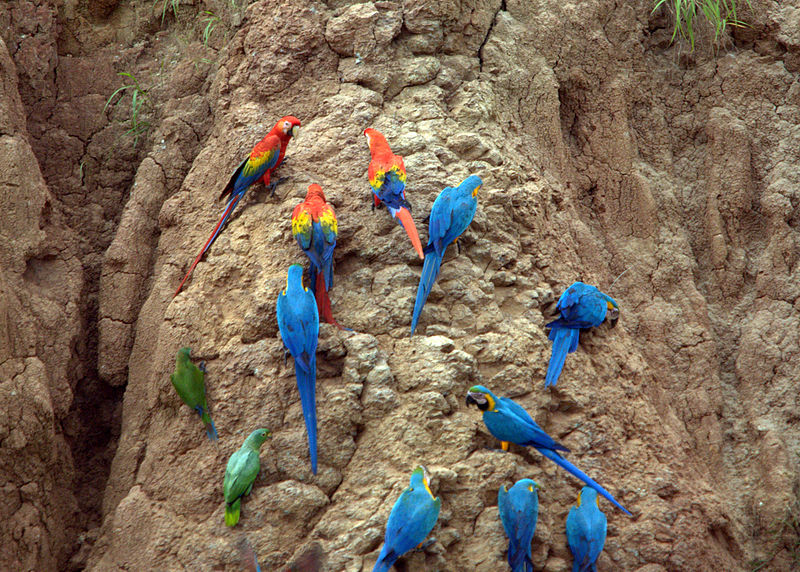
Peru wildlife observation attracts thousands of nature-lovers each year.
Peru Wildlife offers a top destination for birdwatchers and wildlife enthusiasts.

Bird Watching

Peru is the ideal destination for “bird watching” due to geographical and climactic factors that have allowed over 1,830 species to thrive in the country.

Observation of land mammals

Peru is a megadiverse country, containing 84 of the 114 life zones, 8 bio-geographical provinces and three large basins.


Watching Wales and Other Marine Mammals

The Peruvian sea is thome of 33 species of marine mammals (whales) who inhabit different points along the peruvian coast. The Amazon River also boasts species such as otters and pink dolphins, whose unique beauty and color are truly astonishing.

Orchid Spotting

The orchids attracts thousands of tourists to Peru who are interested in seeing them in their natural state.


Butterfly Watching

Peru holds the world record of butterfly species, with approximately 4,000 species, 59 of which are endemic.


Amphibian Spotting

Peru’s rich bio-diversity includes organisms that live inside the soil fauna.

Chinchilla Rat in the Sanctuary of Machu Picchu

A species that for many years was considered extinct was found in the Historic Sanctuary of Machu Picchu (Cusco). This is the Machu Picchu tree chinchilla rat (Cuscomys Oblativus), whose last sighting was recorded in 2009.

The important finding was made as part of a study of the biodiversity in the protected natural area, through the installation of camera traps between April 2018 and April 2019, in three sectors of montane forests within the Sanctuary: Winaywayna, Intipata and Kantupata between 2,650 and 3,430 meters above sea level.

The study was developed by researchers Roberto Quispe, specialist from the National Service of Natural Protected Areas by the State (SERNANP); José Ochoa and Norma Jara from the National University of San Antonio Abad del Cusco, and Daniel Cossios from Biosfera Consultores Ambientales.

After 11 years, the second record is made in images of this rodent that is part of the three endemic mammal species of the Historic Sanctuary of Machu Picchu.

According to the researchers, the first evidence of the existence of this species was made in 1916 based on skeletal remains found inside Inca vessels in excavations carried out in the citadel of Machu Picchu.

Since that date, no sighting of this species was obtained until 2009 when the first and only photographic record of this species of rodent was made during a monitoring carried out by SERNANP park rangers and local residents on the Inca trail route between the sectors. from Puyupatamarca and Wiñaywayna at 2,850 meters above sea level.

After 11 years, the second record is made in images of this rodent that is part of the three endemic mammal species of the Historic Sanctuary of Machu Picchu; that is to say, they are unique to this area as no record of them is found outside this protected natural area.

Odio Utsem Nulla Pharetra Diam Sitametnisl Elementum

Senectus et netus et malesuada fames ac turpis egestas. Sed libero enim sed faucibus turpis in eu. Pharetra diam sit amet nisl suscipit adipiscing bibendum est. Leo in vitae turpis massa sed elementum tempus egestas. Vulputate dignissim suspendisse in est ante in nibh mauris cursus. Nulla pellentesque dignissim enim sit amet.

Eleifend mi in nulla posuere. Morbi tristique senectus et netus. Est pellentesque elit ullamcorper dignissim cras. Scelerisque mauris pellentesque pulvinar pellentesque. Nisl purus in mollis nunc sed. Quam vulputate dignissim suspendisse in. Tellus in metus vulputate eu scelerisque felis imperdiet proin fermentum.

Pellentesque elit eget gravida cum sociis natoque penatibus et magnis. Scelerisque viverra mauris in aliquam sem. Cras semper auctor neque vitae tempus. At augue eget arcu dictum varius duis at consectetur. Euismod lacinia at quis risus sed vulputate odio. Habitant morbi tristique senectus et netus et malesuada fames. Pharetra sit amet aliquam id. Imperdiet dui accumsan sit amet nulla facilisi morbi tempus. Facilisi nullam vehicula ipsum a arcu cursus vitae. Arcu non odio euismod lacinia at quis. Et malesuada fames ac turpis egestas. Volutpat lacus laoreet non curabitur gravida arcu ac tortor.

Orci ac auctor augue mauris augue neque. Senectus et netus et malesuada fames ac. Risus pretium quam vulputate dignissim suspendisse in est ante. Risus pretium quam vulputate dignissim suspendisse. Euismod nisi porta lorem mollis aliquam ut porttitor. At varius vel pharetra vel turpis nunc eget. Aliquam ultrices sagittis orci a.

Amet consectetur adipiscing elit duis tristique sollicitudin nibh sit amet. Feugiat nisl pretium fusce id velit ut tortor pretium. Et sollicitudin ac orci phasellus egestas tellus. Felis imperdiet proin fermentum leo vel orci. Fermentum iaculis eu non diam.

Nam libero justo laoreet sit amet. Quis ipsum suspendisse ultrices gravida dictum fusce ut placerat. Nec ullamcorper sit amet risus nullam eget felis. Nunc eget lorem dolor sed viverra ipsum nunc aliquet bibendum.