Pillones Enjoy Nature in Arequipa

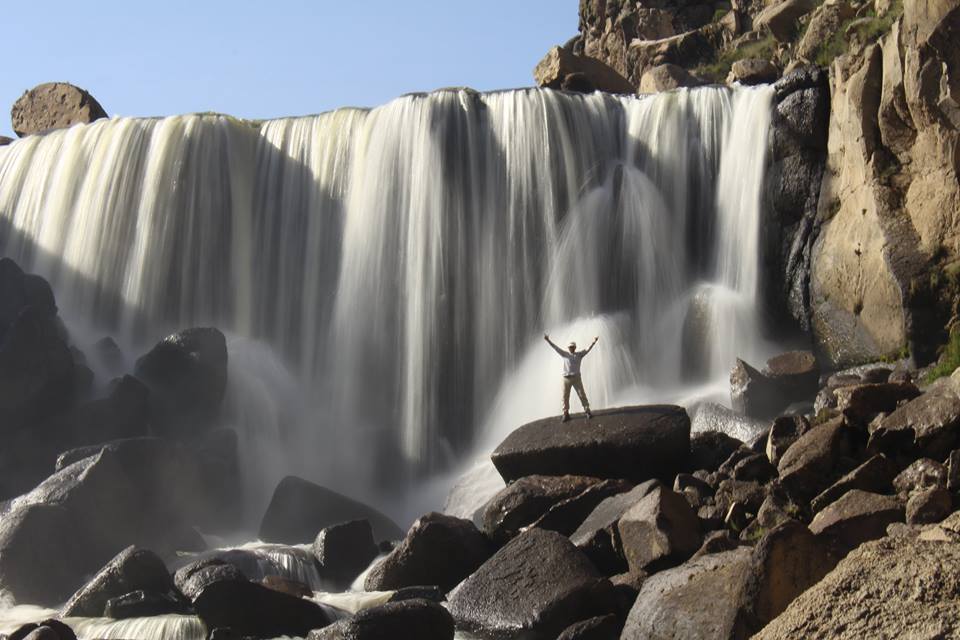
Arequipa is not only it’s ashlar buildings or the excellent gastronomy. Take the advantage of your trip to the White City and discover an alternative destination: Pillones waterfalls, at 4600 m.a.s.l.

For seeing this natural spectacle you must go to the district of San Antonio de Chuca, in the Arequipa, Caylloma, in the 154 kilometer of the Arequipa-Puno road. From this point you must do a 30-minute walk to the left side towards the river. The entrance to the place is S / 2.

Enjoy and relax with the Sounds of Nature’s Symphony at Pillones falls

The best option to reach Pillones with total security is to take a tour from Arequipa. The price includes transfers and an english speaking guide. Remember to go with warm clothes and trekking shoes. In your backpack you can not miss a bottle of water and snacks for the road.

The tour is complemented by a visit to the Imata stone forest. You will spend a nice time in this hidden wonder, you will realize that all efforts were worth it.

When to go?

You can visit this attraction at any time of the year; However, you should consider that during the rainy season (January to March) you can see more water. Do not wait anymore and book a Pillones waterfall tour.

Amazon River a Top Distinction in The world

The Ministry of Foreign Trade and Tourism of Peru (Mincetur) granted, officially, Hierarchy 4 to the Amazon River, the highest distinction that has a tourist resource in the world and that, in Peru, is only owned by Machu Picchu and the Nazca Lines .

The Minister of Foreign Trade and Tourism, Edgar Vásquez, gave this recognition to the regional governor of Loreto, Elisbán Ochoa, in an act where local authorities and businessmen from the sector were also present.

The Minister of Foreign Trade and Tourism, Edgar Vásquez, gave this recognition to the regional governor of Loreto, Elisbán Ochoa, in an act where local authorities and businessmen from the sector were also present.

The head of the Mincetur said that Hierarchy 4 places the Amazon River as a tourist resource of national importance, of great significance for the international tourism market and capable of motivating, on its own, a large flow of visitors.

“With this designation, the Mincetur will define strategies and prioritize actions to develop the tourism potential of the Amazon River and its surroundings. This, in the framework of the execution of the Regional Strategic Tourism Plan (PERTUR) Loreto, ”said the minister.

In that sense, he said that during the year, tourist signaling work will be carried out in the Monumental Zone of Iquitos and, it is expected, the validation of the project “Improvement of the tourist services of the Pacaya Samiria National Reserve”, one of the most representative tourist attractions of the jungle region.

“The Mincetur will invest more than S / 12 million to improve the tourist infrastructure of the Yanayacu-Pucate river basin, the sector most visited by tourists in Pacaya Samiria. This work will begin in 2021 and through the National Copesco Plan, ”he said.

The badge granted to the Amazon River is the result of an evaluation made by the Mincetur, through the Vice Ministry of Tourism, together with representatives of the National Service of Natural Areas Protected by the State (SERNANP), the National Water Authority (ANA), the National Chamber of Tourism (CANATUR) and the Peruvian Association of Travel and Tourism Agencies (APAVIT).

Arequipa: 9 stops on your visit to the White City

Arequipa 9 stops on you visit to the “white city”, one of the most beautiful destinations in Peru.there is no doubt about that. Therefore, if you are planning to go for the first time, we tell you which places you can not miss:

  • Yanahuara Square: It is built of ashlar material and has a viewpoint with a great view of Arequipa, from there you can see its three volcanoes: El Misti, Chachani and Pichu Picchu. It is located at ten minutes by car from the city center.
  • La Plaza de Armas: It is one of the places that you must visit anyway, it is located in the historic center of Arequipa, in addition to It’s beautiful cathedral.
  • Trek to the Colca Canyon: The tour you choose can be two days or more. The hike is very long, so if you decide to do this adventure, you must be in good physical conditions, bring plenty of water and be warm.

Arequipa is a beautiful city; impressive and important enough to be listed by UNESCO as a World Heritage site

  • Cruz del Condor: If you do the hike or the classic tours you will arrive at this place that is one of the great tourist attractions. From the top you will enjoy the vegetation of the Colca and the magical flight of the condors.
  • Picanterías: Arequipa cuisine is very popular and the traditional picanterías of this city support this. The most famous are: La Nueva Palomino, La Benita, La Lucila, La Capitana and La Cau Cau.
  • Vargas Llosa House Museum: In this house was born the Nobel and lived his first years of life, this place is now a museum. The building covers 16 rooms where personal objects of the writer, 3D projections and holograms are displayed.
  • Extreme sport in the Cotahuasi Canyon: It is one of the deepest canyons in the world, but also the ideal place to practice all kinds of extreme sports such as: boating, climbing, paragliding and mountain biking.
  • San Camilo Market: One way to learn about the city is through its markets. There you will find fresh juices and a variety of cheeses, the paria is the most famous.
  • Chocolates: Before finishing your trip through Arequipa and closing it with a flourish, buy the classic La Ibérica chocolates.

Do not forget to book an Arequipa city Tour for enjoying the magic of the “white city”.

Q’eswachaka The Last Inca Bridge

Located at three hours driving from Cusco (Peru) the Q’eswachaka bridge, which crosses the Apurimac River, has become an important tourist attraction that has gained fame among travelers. The reason: it is the last suspension bridge of the Inca culture, so crossing it is a unique experience for any tourist.

Queshuachaca (possibly from Quechua q’iswa a rope of twisted dried maguey or ichhu, chaka bridge, “rope bridge”, consisting of ropes made of grass and spanning the Apurimac River near Huinchiri, in Quehue District, Canas Province, Peru, is the last remaining Inca rope bridge

Located in the district of Quehue, in the Cusco province of Canas, this impressive bridge made of vegetable fiber (ichu) was part of the Inca Trail. Its validity is approximately 600 years.

At 50 meters high, the 28 meters long and 1.20 wide of the Q’eswachaka are a challenge for tourists. Therefore, every year in June, such construction is renewed by the local communities of Winch’iri, Chaupibanda, Ccollana Quehue and Perccaro. It is a ritual that lasts three days.

Fashionable Masks with Colca Design

Artisans depend on more than 90% of the income generated by tourism, national and international, which, since March 16, is almost nil in the Arequipa region and Peru in general and according to the specialists, will be the last sector in recover, so It’s future is uncertain.

But before the crisis creativity comes out. In Huancavelica, protection masks began to be made with handcrafted designs, and in Arequipa it was developed with Colca designs.

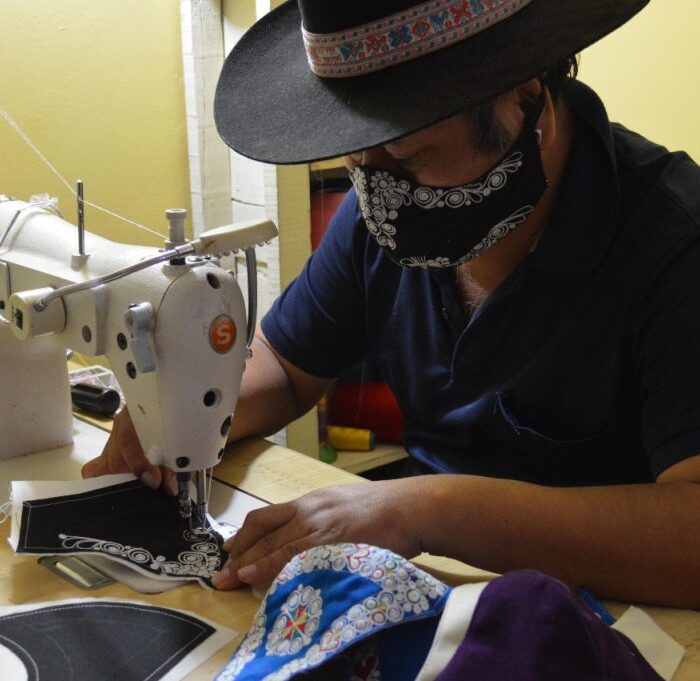
The artisan Condori, started to offer the masks to protect against COVID-19. At 7 years old, Condori was taken to Caylloma until he finished his secondary studies. The art called him so he decided to study at Carlos Baca Flor and became a complete artist. He did dance, music, sculpture, painting, embroidery.

At first he entered as a teacher in an educational institution to teach dance, but he says that there the business is not teaching, but the rental of costumes. “At first dances were performed from different regions, but then Colca became fashionable, so I learned to do embroidery and I started making costumes myself,” he said.

He indicated that these days he decided to make decorative masks for the dance of the Turks. He observed that the quarantine was extended and resources began to run out, so he decided to do something that would urgently generate income for him.

This is how the idea of ​​making masks with the striking designs of the Colca arose and is promoting them through social networks. “It is not a mass production, because only I make them and make them by order,” said the artist.

He says the designs are personalized, some people ask them to embroider their name, others some special badge. For this he uses his sewing machine to which he has added some special needles.

Inside the striking mask has placed a cotton cloth and it is completely washable, the threads do not discolor and it will surely serve so that later, it is kept as a memory of the virus that put the entire world in check.

It works only because it is not an industrial production. “If I hire someone, the work will no longer be mine, the artistic quality would be lost and that is what I intend, that each person who acquires my work can have a product of great artistic quality,” he says.

Andean Condor National Bird of Peru

The Andean Condor National Bird of Peru (Vultur gryphus) is known as the largest flying bird on the planet, this is a Western South American bird and could be found in the Andes. The Andean condor is the largest flying bird in the world by combined measurement of weight and wingspan.

The Vultur Gryphus is a national symbol of Argentina, Bolivia, Chile, Colombia, Ecuador, and Peru and plays an important role in the folklore and mythology of the Andean regions.

The Andean condor can easily live up to 85 years, therefore it is called the “eternal bird” and is characterized by being sedentary and monogamous. It can measure up to 1.30 meters tall, 3.30 meters wide and its maximum weight is 12 kg.


The adult plumage is black, with the exception of a frill of white feathers nearly surrounding the base of the neck especially in the male.

The head and neck are red to blackish-red and have few feathers. In the male, the head is crowned with a dark red caruncle or comb, while the skin of his neck lies in folds. Juveniles have a grayish-brown general coloration, blackish head and neck skin.


The Colca Canyon in Arequipa, Peru is one of the sites, recognized worldwide, as the condor’s habitat where you can observe the flight of this bird.


The Andean Condor and The Incas of Peru

In Andean mythology, the Andean condor was associated with the Inti or sun deity. This bird is considered a symbol of power and health. In some Peruvian bullfighting, a condor is tied to the back of a bull, where it pecks at the animal as bullfighters fight it.

The condor generally survives and is set free.

This ceremony is called Yawar Fiesta which is a symbolic representation of the power of the Andean peoples (the condor) over the Spanish (the bull).

The Best Places for Watching Condors in Peru

These extraordinary birds can live in very high areas with mountainous regions. Among these places are the Colca Canyon in Arequipa, the Moyobamba canyon in Ayacucho or in Chonta, located in Cusco.

Many condors have also been sighted in coastal areas, near the sea. Outside of Peru, they can be found throughout the Andes, from Colombia to Chile.

They can be seen in areas of Argentina, Ecuador and much of Bolivia.

Differences between llamas and alpacas

Is It easy to find the differences between llamas and alpacas?
The recreation of Andean cuisine draws on elements from other cultural landscapes, such as Europe.
What better way to combine healthy cuisine with Novo Andean flavors in Peru, yielding an intense variety of dishes that delight even the most discerning palates.
Discover which foods and ingredients from Peruvian cuisine make Peru a good destination to visit and enjoy.
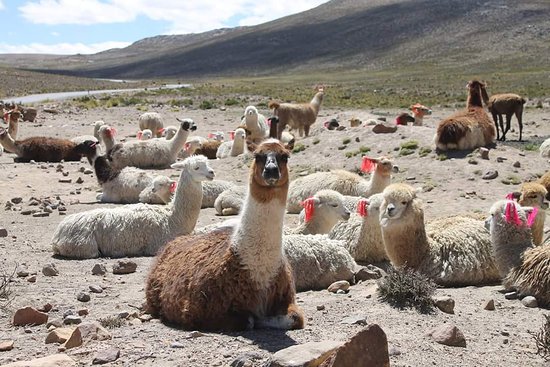
Differences between Llamas and alpacas: Alpacas may seem very similar to the llamas, but there is a variety of differences between them.
Colca Trek 3 Days inside the second deepest Canyon in the world
Differences between the llamas vs alpacas:

  1. Ears: An alpaca has straight, pointed ears. A llama on the other hand has banana shaped ears.
  2. Wool: Llamas have no wool, rather hair that protects but is not appropriate for a sweater or scarf. Alpacas are bred purely for their luxurious wool which is one of the finest in the world.
  3. Face: The face of an alpaca is a lot fuzzier and woollier than a llamas face. A llamas face is also longer while an alpaca’s face is a bit more blunt.
  4. Size: The llama is a lot bigger while alpacas are a lot lighter. The llama can have a height of more than 110 cm, alpacas are generally not much taller than 90 cm.
  5. Purpose: Llamas are known as the “Ship of the Andes”. Their back is very suitable to carry heavy weights for long distances. Alpacas on the other hand, are all wool.
  6. Personality: Alpacas are very gentle and shy while llamas are very confident and brave animals.
  7. Strength: Alpacas can’t protect themselves and need protection. Llamas on the other hand can and will protect themselves.
  8. Character: Alpacas are very intelligent and can learn tricks. Llamas seem to be too confident/proud and arrogant.
  9. Like minded: Alpacas are 100% herd animals and need tot be in a group to survive while llamas are more independent.
  10. Llamas are known for spitting quickly when they feel threatened, whereas alpacas are much more gentle and just spit as their last resort when they’re really angry or scared.

Ultricies mi eget mauris pharetra et ultrices neque ornare aenean. Neque aliquam vestibulum morbi blandit cursus risus at. Eget egestas purus viverra accumsan. In hendrerit gravida rutrum quisque non tellus orci. Cursus euismod quis viverra nibh cras pulvinar mattis nunc. Imperdiet dui accumsan sit amet.

Header 1

Header 2

Header 3

Header 4

Aliquam ultrices sagittis orci a scelerisque purus. Etiam dignissim diam quis enim lobortis scelerisque

Aliquam ultrices sagittis orci a scelerisque purus. Etiam dignissim diam quis enim lobortis scelerisque fermentum dui. Aliquet eget sit amet tellus cras adipiscing enim eu turpis. Neque gravida in fermentum et. Donec massa sapien faucibus et molestie ac feugiat.

lifestyle photography Refreshment Travel

Tempus imperdiet nulla malesuada pellentesque elit eget gravida. Adipiscing diam donec adipiscing tristique risus nec feugiat in fermentum. Sed felis eget velit aliquet sagittis id consectetur purus ut. Convallis tellus id interdum velit. Quam quisque id diam vel quam elementum pulvinar etiam.

143 New Geoglyphs on the Nasca Lines

New geoglyphs on the Nazca Lines were found thanks to the artificial intelligence technologies helped discover these new figures of humans, plants and animals.

What other mysteries hide the sands of the Pampa de Nasca? This time, a team from the University of Yamagata discovered 143 new geoglyphs in the Nasca and Pampas de Jumana Lines, as well as in nearby areas, representing living beings and other objects.

According to the research of the University of Japan, this discovery was made thanks to the studies that the specialists carried out between 2016 and 2018.

lifestyle photography Refreshment Travel

Most of the geoglyphs were discovered to the west of the area and their age is between 100 BC. and 300 AC.

For the study of the ancestral images, the team of the University of Yamagata had the collaboration of the company IBM Japan. Thus, they managed to identify a geoglyph in the form of a human figure with three decorative elements on its head.

For specialists, it is the first case in which artificial intelligence technologies helped discover new geoglyphs.

An academic agreement regarding research on the Nasca Lines states that artificial intelligence technology at the IBM Thomas J. Watson Research Center in the USA. UU. help the Yamagata research team to better understand the distribution of the Nasca Lines.

Thus, the researchers also intend to prepare a location map based on the results of their fieldwork.

By understanding the Nasca Lines as a whole, they seek to accelerate research and, thus, raise public awareness of the need to protect the World Heritage Site.