
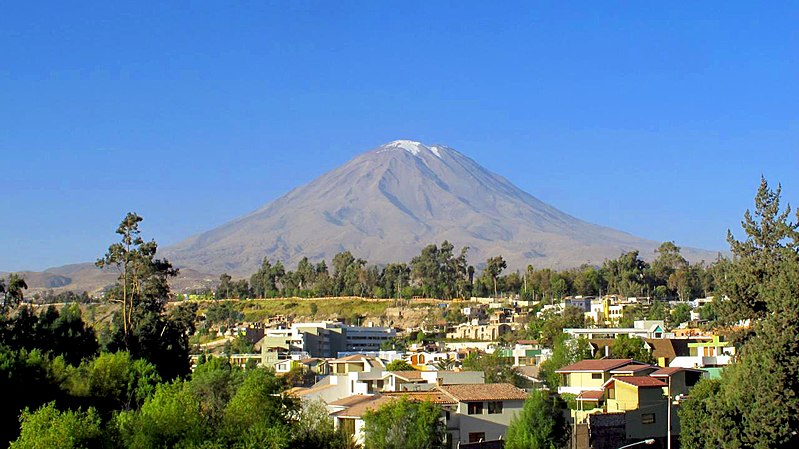
Arequipa shines with its own light. Its magic and charm make it a city that wins the hearts of its visitors every day. It is one of the largest metropolises in Peru and as such a destination of great interest.
The architecture of its streets and squares built from volcanic stone gives it a unique beauty that is complemented by the majestic landscape of the volcanoes that surround it. Like these, there are many more interesting and striking data. And it is that Arequipa is full of secrets and curiosities that not everyone knows. Do you want to discover some more? Join us in this note.
The White City
It is named for the ancient use of ashlar: a stone of volcanic origin that has served as the main element for the construction of many of the houses, monuments and temples that are located in the historic center, including the emblematic Cathedral. Its characteristic white color, the result of the ashes accumulated over time from neighboring volcanoes, gives the city a special shine through the sun’s rays that shine on the facades of buildings when evening falls.
If you want to know more about this unique stone, there are tourist circuits such as the so-called Ruta del sillar where you will observe the extraction process and the carving work that is carried out with this material. The tour includes visits to impressive attractions whose geological formation is also due to this unique and beautiful stone.
Picanterías with more than 500 years of history
One of the greatest heritages that Arequipa has is its gastronomic culture. This heritage that has prevailed for more than five centuries is evidenced today by the large number of picanterías that exist throughout the city. We are talking about restaurants with a great tradition and that are the best alternative to enjoy the extensive and varied list of typical Arequipa dishes that conquer Peruvians and visitors from all over the world.
They are known as picanterías for the special use of chili peppers in the preparation of dressings, sauces, creams and in each of the recipes. This Peruvian ingredient adds a spicy flavor to each dish that every diner should savor and enjoy.
A city surrounded by volcanoes
Arequipa is located under the shadow of three volcanoes: Misti, Chachani and Picchu Picchu. Being the first, the most emblematic and the only one that remains active. Its last eruption was in 1985. Currently it is permanently monitored by the Geophysical Institute of Peru (IGP).
It is possible to witness the volcano up close (up to the crater) through a tourist tour that is carried out partially or totally. Although the entire route demands an important physical demand, once at the top, the view of the surrounding Arequipa countryside is unmatched.
Birth of Characatos
When visiting Arequipa you will surely hear the word characato in many places. This term has been used for many years to refer to the inhabitants of both the city and the entire region. It tells the story that in the 16th century a group of men and women moved to the town of Sara Kato, a word made up of two Quechua words: Sara, which means corn, and Kato, sale or market. With the passage of time, the term Sara was derived to Chara.
Years later, the settlers traveled to the present north of Chile with the purpose of selling their merchandise, and when the inhabitants of the place asked them where they came from, they answered: “from Characato.” It was thus that over time this gentilicio that currently distinguishes Arequipa was born.
Juanita, the Inca Mummy
One of the greatest discoveries you can find in Arequipa is Juanita, a mummy found on the top of the Ampato volcano in 1996 belonging to the Inca culture (15th century). Currently it is possible to observe it closely at the Andean Sanctuaries Museum, one of the main cultural centers of the city. Its historical value is so important for Peru that it was declared a Cultural Heritage of the Nation.
The “ice girl”, as it is also called, surprised the world after its discovery due to its perfect state of conservation attributed to the natural mummification process that the body went through as a result of glacial freezing, which prevented its decomposition.
