
What You Shouldn’t Miss in Your Suitcase During Your Trip to Peru

When planning a vacation, the first thing you look for is airfare or a bus ticket to secure transportation, as well as researching the main tourist attractions you’ll want to visit. However, one of the most complex tasks comes days before the trip: what to pack. If you’re about to visit Peru and don’t want to make a mistake when packing your suitcase, here’s a quick guide on what you can’t miss to avoid complications with the weather.


Packing is often considered one of the most complicated activities because you end up packing clothes you won’t use and just take up space, or you forget important items that can ruin the experience or force you to spend more money, putting you over your budget.
That’s why it’s vital to know what to take and what not to take when you arrive at a new destination, even more so if you’re arriving in Peru and want to visit the beaches, Machu Picchu, or head to the jungle.


What Should I Pack in My Travel Suitcase?

Each destination in Peru has its own unique climate and needs, and for that, we must pack well. Before thinking about clothing, shoes, or accessories, it’s vital that you set aside a specific space for essentials like your ID, foreigner’s card, or passport. These should be kept separate, along with tickets, reservations, and travel insurance.

Pack According to the Region

Peru’s diversity can be a challenge when packing, this is the reason why Perou Voyage Tours, recommends doing some research on the climate and packing accordingly.

For coastal cities like Lima, Paracas, or Máncora, cool, light, and versatile clothing, sunglasses, a hat, a swimsuit, and sandals are recommended, not to mention a light sweater for the colder evenings. For mountain destinations like Cusco, Arequipa, or Huaraz, it’s essential to have thermal clothing, a windbreaker, hiking shoes, and gloves, as well as a thermos for hot drinks to help you counteract the cold temperatures.

Finally, if you’re traveling to jungle cities like Iquitos, Tarapoto, or Madre de Dios, you should pack lightweight, long-sleeved clothing to avoid bites, a raincoat, a hat, and water-resistant shoes.

Pack According to the Activity

For trekking and adventure activities, you’ll definitely need an ergonomic backpack or one comfortable enough to hold your thermal clothing, jackets, snacks, canned goods and drinks, as well as your camping gear.

To explore the city, make sure to wear comfortable footwear; hiking boots aren’t necessary, but hiking shoes are, along with a secure bag to store your essential documents and a small backpack. Exploring the jungle requires a little more preparation. The humidity, combined with the high temperatures, will require you to stay hydrated and light, so pack quick-drying clothing, toiletries, sunscreen, a hat, and water bottles in a lightweight bag.

It’s also essential to have toiletries, sunscreen, a good insect repellent, and a reusable water bottle on hand to stay hydrated throughout your trip.
The 5 Best Destinations to Travel in Peru on Easter 2025

Just a few days before the start of Holy Week 2025, one of the most anticipated celebrations for Christians, commemorating the passion, death, and resurrection of Jesus Christ. These religious dates are considered holidays, giving Peruvians a perfect opportunity to escape from daily stress, spend more time with their families doing various activities, or simply decide to escape to beautiful tourist destinations in Peru. These places not only offer religious traditions but also offer opportunities to enjoy the local cuisine. In the following article, we’ll tell you all the details.

What are the Destinations to Travel During Holy Week in Peru?

For many Peruvians, Holy Week has become a unique opportunity to reflect, commemorating the Way of the Cross of Jesus of Nazareth from his condemnation to his crucifixion and burial. However, it is also a great opportunity to experience religious and cultural customs in various parts of the country, where imposing churches and rich cuisine predominate, in addition to boosting the economy of these areas.
Find here a list of tourist destinations for families to enjoy during the long holiday of this religious festival:

Arequipa:

The “White City” is the perfect place to celebrate Holy Week. Arequipa, famous for its dazzling architecture, transforms during this time into a place of deep spirituality and tradition. The processions, music, and food provide an unforgettable experience for thousands of tourists.

Holy Week is a great opportunity to experience religious and cultural customs in various parts of the country, where imposing churches and rich cuisine predominate.

Piura:

Holy Week in the northern city is celebrated with great devotion in the district of Catacaos, a holiday that has been recognized as a National Cultural Heritage. This date is one of the most significant for the region, notable for the intense faith of the Cataquense community. Local traditions and customs infuse an air of mysticism into each of the ceremonies that commemorate the passion, death, and resurrection of Jesus Christ.

Cusco:

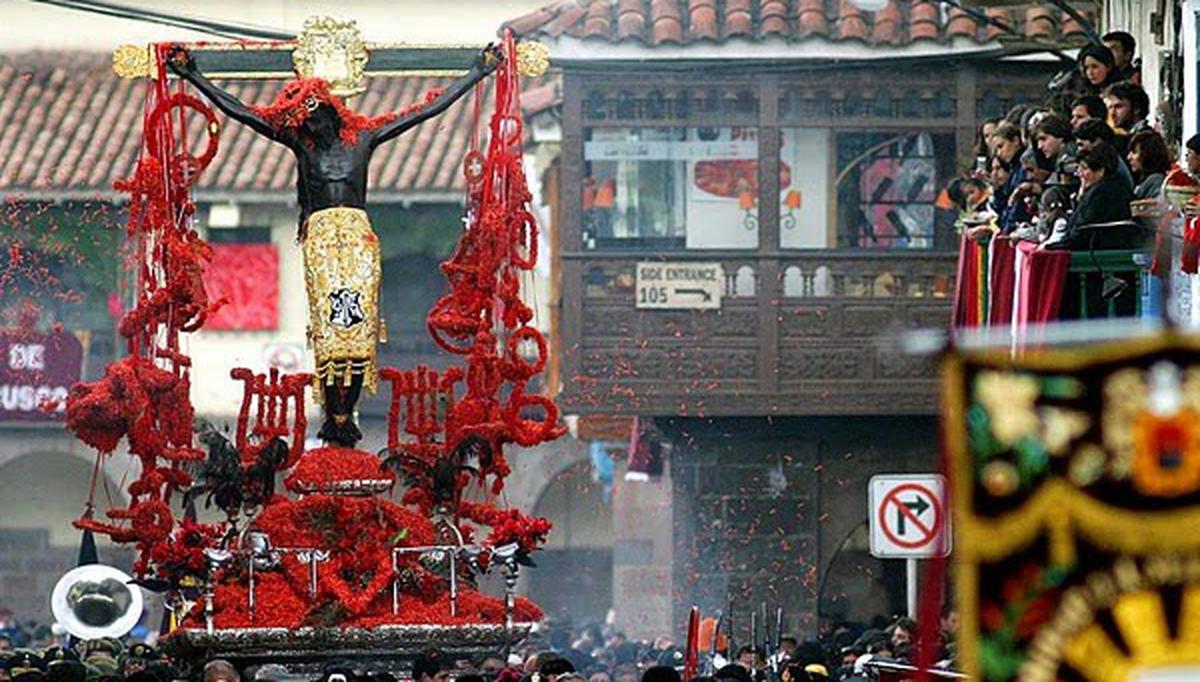
This city is one of those destinations that captivates you from the first moment. During Holy Week, the city becomes an epicenter of religious and cultural celebrations, attracting thousands of tourists, who are amazed by everything the imperial city has to offer.

Huaraz:

If you want a Holy Week filled with mysticism and surrounded by nature, you can’t miss Huaraz. In the heart of the Andes, you will live an experience steeped in faith while enjoying the stunning beauty of the Cordillera Blanca.

La Libertad:

In this region, Holy Week is celebrated with great fervor and history, especially in the district of Moche, just 30 minutes from Trujillo, and in Otuzco, about two hours from the city. Both destinations are ideal for experiencing a Holy Week steeped in tradition and devotion.

When is the Easter Long Holiday 2025?

As part of Holy Week 2025, the first long holiday of the year will take place on April 17 and 18, corresponding to Holy Thursday and Good Friday, respectively. These dates are added to Saturday 19 and Sunday 20 April.

How is Holy Week Celebrated in Peru?

Peru’s cultural diversity is reflected in the diverse ways Holy Week is commemorated in different regions of the country. For example, in Ayacucho, where processions and flower carpets are held in various parts of the city, attracting thousands of tourists every year.

Meanwhile, this religious holiday in Cusco is notable for the procession of the Lord of the Earthquakes or Señor de los Temblores, which, along with its faithful devotees, parades through the main streets. In Lima, citizens traditionally visit churches, celebrate Mass, and other activities. Therefore, we present the meaning of Holy Week:

Palm Sunday or Lent: This is the beginning of Holy Week. It commemorates the entry of Jesus of Nazareth into Jerusalem, according to the Gospel. On this date, Christian and Catholic churches celebrate masses and palm processions.
Holy Monday: This is the second day of Holy Week, which commemorates Jesus’ expulsion of the merchants who occupied the Temple in Jerusalem.
Holy Tuesday: This reflects the biblical passage in which Jesus meets with his apostles and tells them that one of them is going to betray him.
Holy Wednesday: This marks the end of Lent and commemorates the day Judas Iscariot betrayed Jesus.
Holy Thursday: This commemorates the celebration of the Last Supper.
Good Friday: This commemorates the passion and crucifixion of Jesus on Mount Calvary or Golgotha ​​in Jerusalem. Some believers observe fasting and abstinence during the day.

Holy Saturday: This is the prelude to the resurrection.
Easter Sunday: This is one of the main Christian holidays, as it celebrates the resurrection of Jesus.