The Best Destinations to Enjoy Peru as a Couple

From the mountains in Cusco to the desert of Ica, Peru offers a variety of experiences to live as a couple. Find here “The Best Destinations to Enjoy Peru as a Couple”.

Traveling with that special person is an unforgettable experience. Before boarding, lovers usually look for destinations that offer the ideal environment for romance.

The variety of destinations in Peru is the perfect range to find the option that best suits the needs of the couple. From the mountains, which offer mountains and landscapes that leave you breathless, to the unpredictable Amazon jungle or the refreshing coast; Peru has it all. We share 5 incredible experiences that you can book to enjoy Peru as a couple.


See the sunrise on Lake Titicaca in Puno

Waking up and seeing the sunrise reflected in Lake Titicaca is an experience that deserves to be included on the 2024 travel list. Even more so, if it is a couple’s trip. Lake Titicaca, the highest navigable lake in the world, offers a unique opportunity for the traveler.

With its 3812 meters above sea level, touring it aboard a boat is to contemplate the immensity of its calm and cold waters. On that trip, its flora and fauna are discovered, as well as the legend that precedes it. It is said that Manco Cápac and Mama Ocllo emerged from the lake, who were sent by the Sun God to build the Inca Empire. That mystical energy that surrounds the Lake makes the trip an even more special experience.

To reach this wonder from Lima, you must take an air flight to Juliaca, a good entry point to Lake Titicaca.

In addition to touring the lake, you can visit the surrounding islands, Uros, Taquile and Amamantí. There local residents share their ways of life and you can experience experiential tourism.

To experience an unforgettable couple’s trip, it is recommended to stay in the area. Spend a night in front of Lake Titicaca and discover what Puno has to offer. S

unrise in front of the Lake, dining outdoors, strolling aboard a boat on Lake Titicaca promises to be a perfect atmosphere for romance. Currently there are numerous hotels on the Islands of Los Uros and Amamantí.


Enjoy the Sunset in Máncora

A trip to the beach is never lost. Even more so, if they are resorts with as much gastronomic and entertainment offer as Máncora. The paradise of palm trees and calm waters located in the department of Piura, welcomes tourists all year round thanks to its pleasant climate. To get there, you must take a flight from Lima to Piura or Tumbes, and continue the journey by car to the beach.

The offer of hotels for couples in Máncora grows every year. In these specialized venues to fan the flame of love, there are personalized experiences according to the needs of each couple. DCO is a boutique hotel located on Las Pocitas beach, ideal for couples because it has independent suites. In addition, the hotel offers experiences such as dinners on the beaches, breakfasts or lunches on the terraces of each suite, a spa for couples, among other activities.

Máncora offers different activities to enjoy for two. On the seashore you can go horseback riding as a couple to enjoy the unforgettable sunsets. In addition, the spa has become an ideal place to organize retreats and yoga classes for those who connect with their spirituality.


Glamping in Huacachina, Ica

Did you know that you can sleep with your partner in the middle of the desert? This storybook romantic getaway has become popular in recent years. Huacachina is a desert oasis located in the city of Ica. Sleeping among its dunes means spending a mystical night with the silence that only the desert knows how to offer.

To achieve this you must take the Panamericana Sur and travel by car to the city of Ica. From there, you can hire a travel agency that provides the Glamping service. Currently, numerous companies have packages to live the experience.

The experience will depend on the company hired, but a romantic night in the desert is usually offered with dinner by a private chef, a bottle of sparkling wine, a tent with a double bed and other elements for a great experience. In addition, some tours also consider tubular rides through the desert.

The experience promises to be one of the most romantic on this list.


Cruise for two through the Amazon

Another romantic experience that tops the 2024 travel list takes place in the Amazon jungle. Exploring the jungle on a luxury cruise with the ideal partner can become a priceless memory. To live this experience, you must reach the city of Iquitos, where there are companies that provide this type of services.

Delfin Amazon Cruises is one of these companies that allows you to explore the Pacaya Samiria national reserve. On the cruise, you can find rooms with large windows that allow you to enjoy the view. Through the boat you travel along the Amazon River while enjoying the flora and fauna.
. In this experience, couples can stay in a cabin in the middle of the mountains with views of the Nevado de Chicón, which is part of the Andes Mountains. Each cabin is set back from the other to offer privacy and tranquility to guests. The most popular suite features a queen bed, private bathroom, fire pit area and outdoor jacuzzi. The experience offers the opportunity to enjoy an afternoon in the jacuzzi in front of an invaluable landscape surrounded by local animals and with a plated dinner.

In addition, you can also go horseback riding in the beautiful wheat and barley growing pampas of Maras, picnic wine, cheese and painting with a view of the mountains of the Sacred Valley of the Incas, ATVs along the best alternative routes of Maras capturing landscapes. unique along the way, among other experiences.
Cruise for two through the Amazon

Another romantic experience that tops the 2024 travel list takes place in the Amazon jungle. Exploring the jungle on a luxury cruise with the ideal partner can become a priceless memory. To live this experience, you must reach the city of Iquitos, where there are companies that provide this type of services.

Delfin Amazon Cruises is one of these companies that allows you to explore the Pacaya Samiria national reserve. On the cruise, you can find rooms with large windows that allow you to enjoy the view. Through the boat you travel along the Amazon River while enjoying the flora and fauna in the surroundings.

In addition, in this experience you can do various activities such as exploring the rivers by kayak, visiting the villages, swimming with pink dolphins, riding a paddle board and going on night safaris.

Jacuzzi between mountains in Cusco

Cusco is always a good option. The capital of the Inca Empire is the perfect mix of culture, history, adventure and nature that every good traveler wants to try. Since the naming of Machu Picchu as one of the seven wonders of the modern world, the city has received hundreds of tourists seeking to discover the Inca citadel and, in the process, be surprised by other treasures in their path.

Among the novelties that Cusco offers are experiences in the mountains. At more than 3,000 meters above sea level, in the town of Maras there are eco-sustainable outdoor cabins that offer a dream experience.

Mountain View Experience combines nature with luxury. In this experience, couples can stay in a cabin in the middle of the mountains with views of the Nevado de Chicón, which is part of the Andes Mountains. Each cabin is set back from the other to offer privacy and tranquility to guests.

The most popular suite features a queen bed, private bathroom, fire pit area and outdoor jacuzzi. The experience offers the opportunity to enjoy an afternoon in the jacuzzi in front of an invaluable landscape surrounded by local animals and with a plated dinner.

In addition, you can also go horseback riding in the beautiful wheat and barley growing pampas of Maras, picnic wine, cheese and painting with a view of the mountains of the Sacred Valley of the Incas, ATVs along the best alternative routes of Maras capturing landscapes. unique along the way, among other experiences.

Top 10 Places to Visit in Peru

Discover the Top 10 places to visit in Peru” and you cannot miss during your trip to Peru. From the mysterious Valley of the Geysers in Tacna, to the Wonder of the World in Cusco, passing through the majesty of the Peruvian jungle.

The Valley of the Geysers in Tacna

Located at 4,400 meters above sea level in the Vilacota Maure Regional Conservation Area, in the province of Candarave, 4 hours from the city of Tacna, in southern Peru.
Famous destination for hosting 85 geysers or hot springs of volcanic origin with temperatures that exceed 86°C, and which form a natural setting from another planet.

How to get there from Lima

The trip from Lima to Tacna takes 22 hours by car and one hour and 45 minutes by plane. The only airline that offers this route is Latam Airlines. To get to the Valley of the Geysers you must do a trip to Vilacota – Maure for 4 hours by car.

What You Can’t Stop Seeing


Miculla Petroglyphs

Located at 26 km from the city of Tacna, there are the Miculla petroglyphs. Here you can see petroglyphs representing animals and people. Near the place, there is also a 65-meter-long suspension bridge.

Ite Swamp


Located at 95 km. From the city of Tacna, at the mouth of the Locumba River, is the second largest swamp in all of South America.

There you can see a large population of water birds such as the white heron and the red duck.

Machu Picchu

Located at 2445 meters above sea level in the homonymous district, in the province of Urubamba, in the department of Cusco.

Recognized as one of the wonders of the modern world and a World Heritage Site in 1983, Machu Picchu is the pride of Peru. The historic sanctuary was one of the most important religious, political and cultural centers of the Inca empire.


How to get there from Lima

To get to Cusco, you must take a flight of approximately 1 hour and 15 minutes. Once in the city of Cusco, you must travel for approximately two hours by bus or car to Ollantaytambo, where you take a two-hour train to the Inca citadel.


What you can’t stop seeing
Maras and Moray

The Maras salt mines are a group of three thousand natural salt wells. In the archaeological center of Moray there are circular terraces that were places of agricultural research in the time of the Incas. ATV rides can be done in the area.


Chinchero

Known for its textile centers, in the town of Chinchero you can see alpaca clothing using ancestral spinning and dyeing techniques. You can also visit its archaeological site.


Ollantaytambo

Administrative center and residence of the Inca nobility during the Inca Empire. Its main attraction is its fortress located on a hill, where you can see a series of stone constructions such as the Temple of the Sun, the Baños de la Ñusta and more.

Pacaya Samiria National Reserve

Pacaya Samiria is located in Iquitos, Loreto Department, in the jungle of Peru.
It is the largest terrestrial National Reserve in Peru and one of the largest floodplain forests in South America. This is a protected natural area that stands out for its biodiversity and geographical extension of 2,080,000 hectares.


How to get there from Lima

Take a plane from Lima to Iquitos for approximately 1 hour and 40 minutes. Then, travel by bus for two hours to Nauta and from there, a boat to the entrance of the reserve.


Monkey Island


Rescue center that aims to protect these animals. Rescue, rehabilitation and release of monkeys that have been victims of species trafficking.


Iquitos City

In the city of Iquitos you can walk through the Plaza and its streets, visit the Belén neighborhood or the Amazon Rescue Center (CREA).

Gocta Waterfall

It is located between the caserios de Cocachimba, San Pablo and Coca, in the district of Valera, province of Bongará in the department of Amazonas, northwest of Peru.
Famous destination for its majestic waterfall of more than 700 meters high (divided in two) surrounded by a dreamlike landscape. A natural Amazonian jewel that stands as one of the highest waterfalls in Peru.

How to get there from Lima


The trip from Lima to the city of Chachapoyas takes between 20 to 24 hours by land; and by air, 1 hour and a half. ATSA Airlines is the only airline that offers flights to this city. To get to the waterfall, you drive for 1 hour to Cocachimba or San Pablo and take a 2 to 3 hour tour (on foot or horseback).

What you can’t stop seeing

Kuelap Fortress


The ancient citadel of the Chachapoyas culture with imposing walls of up to 20 meters and more than 500 stone houses. You can appreciate it through the famous cable cars (minimum cost) and enter the archaeological complex with an entrance fee (20 soles for the general public).

Tambopata National Reserve

Its extension includes the districts of Tambopata and Inambari, located in the province of Tambopata in the department of Madre de Dios, in southern Peru.
Famous destination for its 274,690.00 hectares of vast biological diversity in its habitats. Approximately 648 species of birds, 108 species of mammals, 103 species of reptiles, 323 species of fish, 1,200 species of butterflies and 93 species of amphibians make up the fauna. While 1713 species of plants make up the wild flora.

How to get there from Lima


The trip from Lima to Tambopata takes approximately 30 hours. by land; and by air, 1 hour and 40 minutes to Puerto Maldonado. To get to the reserve, you travel by boat for 2 hours.

What you can’t stop seeing
Macaw clay licks


You can see the colorful parade of chucho and red macaws that arrive at the famous clay licks, large areas of salt and clay where these birds come to feed as part of their daily diet.


Lake Sandoval


With more than 3km in length, the lake is the ideal place to observe the local flora and fauna, highlighting the presence of otters and turtles.

Colca Canyon

The canyon is located within the Colca Valley in the province of Caylloma in the department of Arequipa, in southern Peru.
Famous destination for the imposing canyon measuring 4,160 meters in length that crowns it as one of the deepest and most mysterious in the world.

How to get there from Lima


The trip from Lima to Arequipa takes 16 hours by land; and by air, 1 hour and 25 minutes. Latam, Sky and JetSmart airlines offer flights to the city. From there, it is a 3-hour drive to Chivay and then a short one (10 minutes) to the canyon.


What you can’t stop seeing
Cruz del Condor Viewpoint


Strategic point from where you can observe the Colca Canyon and the imposing flight of the condors.
adventure sports
The vast landscape is also ideal for practicing extreme sports such as trekking, zip line, mountain biking and even canoeing on the Colca River.

Visit Nearby Towns


Sibayo, Yanque, Callalli, Coporaque and, of course, Chivay are some of the magical towns that can be visited along the way. You can do rural and gastronomic tourism and enjoy local activities and customs.

Visit Churches


Religious tourism visiting the Church of the Immaculate Conception (Yanque) and the Church of Santa Ana (Maca). An unmissable route during the excursion to the Colca Canyon.

Uros floating islands

Located at approximately 3,815 meters above sea level, the floating islands of the Uros lie west of Lake Titicaca, 7 km northeast of the city of Puno in the department of the same name, southeast of Peru.

Famous destination for the impressive complex of islands built from reeds that float on Lake Titicaca, one of the largest and highest in South America.

How to get there from Lima

The trip from Lima to Puno takes 21 hours by land; and by air, 1 hour and 35 minutes. From there, you will travel by car or taxi to the city of Puno for 45 minutes.

What you can’t stop seeing

Taquile Island

Taquile offers colorful textiles made by the local community itself. In addition, you can walk the trails that will take you to the Inca terraces and ruins, where you can appreciate the old architecture and at the same time enjoy the great view of the town and the lake.

Amantani Island

It is considered an attractive place for both ecotourism and archaeological and experiential tourism, It is very famous among tourists looking for an experience beyond the city.

Puno City

Located on the banks of the Titicaca River, the capital has various tourist attractions such as the Cathedral Basilica of Puno, the Balcón del Conde de Lemos, the Deustua Arch and more.

Cutimbo archaeological complex

A pre-Hispanic mausoleum southwest of Lake Titicaca. It has cave paintings, funerary towers and buildings made of stones that are more than 8 thousand years old.

The Delicious Arroz Chaufa

chifa in lima

The delicious arroz chaufa is one of the most popular and consumed recipes by Peruvians. It is common to find a chifa in each district that has fusion dishes on its menu, which has different variants and ingredients for the taste of diners.

For this reason, you will learn more about chaufa rice, such as its origin, preparation, the types and ingredients it contains and what the word chifa means; just as we did in the grilled chicken note.

What is the origin of the Arroz Chaufa?

The history of this dish begins at the end of the 19th century, with the arrival of Chinese immigrants to Peru. The Asian community worked in all types of jobs, mainly on the country’s coastal farms. As part of the payment for their work days, they received a daily ration of rice, combined with spices.

The use of this ingredient and others brought from China, such as soy sauce, seeds and kion, together with the custom they had of taking advantage of the previous day’s food, helped the creation of a dish that used cooking techniques in the frying pan. This is how chaufa rice was born, a word that comes from the Cantonese word “chaofan”, which means fried rice.

As the years went by and when they left jobs on the haciendas, the coolies opened small restaurants that were well received by Peruvians, since the cooking methods and the exquisite flavor of their recipes attracted attention.

The great popularity that chaufa rice achieved in the country meant that it was successfully adapted in different regions of the country, such as seafood chaufa, quinoa rice or Amazonian rice.
What is the origin of the word chifa?

The origin of this word dates back to the same years in which chaufa rice was born, when a new expression was included in the lexicon of Peruvians when they wanted to name the restaurant where they sold the dishes made by the coolies.

It is “sec fan”, which means “come eat rice”, which later led to “shic fan” or “chi fan”, both of which were adapted to the Spanish language as “Chi fa” or simply chifa.

Puno The Best Experience in 2024

Lake Titicaca Day Tours Puno

Puno, the border department with Bolivia, is surrounded by beautiful landscapes, among which Lake Titicaca with its admirable beauty.


Puno, a city that stands on the shore of Lake Titicaca, is a gateway to a world of wonders that deserves to be discovered.

Located at 3,800 meters above sea level, the city offers a series of first-class activities.

Puno The Best Experience in 2024


Religious City

The tour starts in la Plaza de Armas, its cathedral and the church where the Virgen de la Candelaria is located, fervently venerated every February with Catholic traditions and symbolic elements of the Andean worldview.

The Cathedral of Puno was built in the 18th century, as a symbol of Spanish colonization in the region. The baroque façade, made of volcanic stone, has 12 figures, among them two mermaids that, explained in the bishop’s own words, represent Lake Titicaca, and two pumas, which represent the underworld.


Five blocks away is the San Juan church, home of the Virgin of Candelaria, patron saint of the department. Every year, in the month of February, Puno transforms into a scene of religious fervor and celebration, when thousands of dancers, musicians and faithful gather to pay tribute to the Virgin during the Candelaria festival.


Refuge of Nature

Lake Titicaca is the highest navigable lake in the world. Its serene and crystalline waters are witnesses of the legend of the god Viracocha, who emerged from the depths and created the sun (Inti), the moon (Mama Killa), the stars and the first people.

Located half an hour north of Puno, the Titilaka Hotel is a resort that offers a privileged view of this national reserve.

Isolated from any contact with reality, it is the ideal place to enjoy peace and tranquility through excursions and walks around the lake.

With modern architecture and decorated with unique textiles such as tapestries, rugs and blankets, the gastronomy it offers is a unique experience. Ceviche with trout as the main figure, artisan breads, proteins accompanied with quinoa and fresh vegetables.

The hotel offers a culinary experience that highlighted the simplicity and excellence of local cuisine.

If you are one of those who like adventure, you can even take a kayak ride on the lake and admire the beauty of the place.


Spiritual Renewal

Trhough your trip to Puno, you will reconnect with nature and inner peace. If you are a person looking for starting 2024 refreshed, don’t miss the opportunity to do so through a concert of quartz bowls and crystal bells right at sunset.

The Amaru Muru Portal is an archaeological enigma that stands in the town of Ilave. This mysterious place defies logic and baffles researchers due to its alignment with astronomical events.

The Collas used this place to mark solstices, equinoxes and other phenomena of importance in their worldview.

Also known as The Devil’s Portal, it is carved into a huge red granite stone that rises up to 7 meters high.

The place is ideal for meditation and recharging energy. Its remote location and lack of tourist attention keep it in a state of serene solitude, making it a special destination for travelers in search of authenticity.

Good news! The Inca Trail to Machu Picchu Reopens For All Tourists

On Wednesday, March 1st, the Inca Trail to Machu Picchu Reopens for all tourists: national and foreign tourists.


Good news for hiking lovers! The famous network of Inca Trails that leads to Machu Picchu is enabled for all tourists. On Wednesday, March 1, the trail was enabled, after conservation and maintenance work by specialists from the Decentralized Department of Culture of Cusco (DDC Cusco).

The director of the DDC, Maritza Rosa Candia, was the one who gave the excellent news and mentioned that the Inca Trail network is in optimal conditions. This is in accordance with a technical file and the work articulated with the National Service of Areas Protected by the State (Sernanp).

In addition, she maintained that the security for the access of local, national and foreign visitors is guaranteed and stressed that it is necessary to take the services of a formal tourism agency to make use of and undertake the exciting journey.
“The works consisted of preparing drains for rainwater, protecting wall heads, stairway protection, retaining walls, cutting vegetation, everything that concerns us and we have already concluded as a culture,” she mentioned.

The evaluation of some vulnerable places where rockfalls can be recorded is still being carried out. This is to protect the lives of visitors. “We have to assure our visitors, where they can stop, where not, where they can rest,” she said. “Culture does the heritage preservation work and the Sernanp the natural part of the sanctuary,” she stressed.


Why Wasas the Inca Trail Closed?

The closure of this pre-Hispanic road network was closed due to maintenance. The works consisted in the cleaning and maintenance of walls, enclosures, stairways, fountains, canals and internal spaces of the archaeological monuments located throughout the network, such as Patallaqta, Sayacmarca, Phuyupatamarca, Wiñaywayna, Intipunku, among others.

Cleaning work was also carried out on cobbled paths, ditches, stone and wooden pontoons, handrails, rest areas, restrooms, the signaling system and the Huayllabamba, Pacaymayo Alto and Wiñay Wayna camps.

Machu Picchu: Peru Announces The Reopening of the World Wonder

In the midst of the protests, the authorities held a meeting and reopened the wonder of the world Machu Picchu: Peru after it had been closed since January 20.


In the midst of the protests against the Government of Dina Boluarte, the Ministry of Culture, through the Decentralized Directorate of Culture of Cusco, announced the reopening of the entrance of visitors to Machu Picchu. Through a statement, he reported that “everything is ready for the reopening of the llaqta inka.” The measure is ordered after the facility remained closed since January 20.

The decision would have been made in a multisectoral meeting held between the authorities, such as the director of the Decentralized Directorate of Culture of Cusco, Maritza Rosa Candia; the head of the National Service of Natural Areas Protected by the State (Sernanp), José Carlos Nieto; the head of the Machupicchu National Archaeological Park, Zenobio Valencia; the director of the Regional Management of Foreign Trade, Tourism and Crafts (Gercetur) of Cusco, Abel Matto; the technical secretary of the UGM, Elvis Flores; and other representatives.

According to the director of the Decentralized Directorate of Culture of Cusco, there is a high demand for visitors seeking access to the wonder of the world.

In this sense, she asked the authorities to guarantee the security of the archaeological center, and the integrity of tourists and workers.

According to the Ministry of Culture, national and foreign citizens may reschedule their visit to Machu Picchu with the same tickets initially purchased; otherwise, they may also request their money back.

Learn to Cook Recipes From Peru

The gastronomy of Latin America has increasing weight in the culinary world. Peru is one of the most outstanding countries for its gastronomy. In addition, you will find restaurants that offer the best typical dishes of the country. Peruvian gastronomy is very abundant and you can find recipes from all regions.

Whoever has had the joy of tasting the dishes of the Coast, Sierra and Selva, knows very well how rich and good food is in Peru.

If you have never had the opportunity to demonstrate your culinary skills, your time has come. An essential requirement is to be in good spirits. Experts say that when cooking it is important to be happy, so now you know. Obviously, the ingredients are essential for the dish you are going to prepare to come out appetizing.

Ceviche

This dish has been very successful and has spread to different Latin American countries. There are different ways to prepare it and it is difficult to say that only one is correct. This easy recipe invites you to discover how to prepare a Peruvian ceviche.

Ingredients to make Peruvian Ceviche:

  • 1 pinch of pepper
  • 1 kilogram of fish of your choice
  • 1 onion cut into julienne strips
  • ¼ cup chopped cilantro leaf
  • 1 chopped yellow chili
  • 1 chopped chili pepper (to decorate)
  • 12 lemons
  • 1 pinch of salt and pepper
  • 1 cup of fish broth
    To accompany:
  • 1 boiled sweet corn
  • 1 boiled sweet potato (sweet potato or sweet potato)
  • 1 bunch of lettuce leaves
  • You may also be interested in: Peruvian sea bass ceviche
    How to make Peruvian Ceviche:

The first thing you must do to be able to prepare the easy Peruvian ceviche recipe is to squeeze the 12 lemons to extract their juice, save it for later. Then, cut the fish into pieces of approximately 3 centimeters. Place the pieces in the container that you will use to serve the dish.

Mix the fish with the chopped yellow pepper, the fish broth and the cilantro. Also place the onion cut into julianas and the crushed garlic. Let it rest for a few minutes so that it marinates well and soaks up all the flavors.

Season to taste and place the boiled sweet potato, lettuce and sweet corn, also boiled, on one side of the plate.

Then, pour the lemon juice all over the plate so that everything is well covered. Finally, cut a slice of red chili pepper and place it as a decoration. Reserve it in the refrigerator to cool, since this is a dish that is served cold. Peruvian ceviche is a dish that acts as an appetizer, so you can accompany it with rice with shrimp or a delicious salmon with shrimp sauce. Ready to eat!

Peruvian Cebiche – Suggestions and other recipes


There is no single way to prepare ceviche. The original Peruvian cebiche recipe can vary in ingredients depending on the region where it is prepared. However, all good ceviche must have a good quality fish and be marinated in coriander, chili pepper and lemon.

In the event that you want to learn how to prepare ceviche, you can start using fish such as sea bass, sea bass, hake or monkfish. Likewise, you can vary the garnishes and accompany your dish with some delicious green plantain or toasted corn chips like the one we have used in this recipe for tilapia ceviche with toasted corn.

If you want to know other alternatives, discover all the ceviche recipes that we have in RecetasGratis. You can start with these!

Ceviche de pota
Ceviche de merluza
Ceviche de gambas
Ceviche de lubina
Ceviche de pescado
Tartar de salmón con aguacate y mango
Ceviche mexicano de pescado
Ceviche de pescado ecuatoriano
Ceviche de camarón y palta

Aji de Gallina

This is one of the most popular dishes in Peru. It is said to have its origins in the Catalan “menjar blanc”, a salty version of the white manjar dating from medieval Spanish times, and was prepared with chicken, rice starch, almonds and sugar.

Ingredients


3 Shredded, Cooked, Boneless Medium Chicken Breasts
2 carrots
1 celery
3 bay leaves
6 garlic cloves
1,diced medium onion
Salt and pepper to taste
1 ají amarillo or 2 tablespoons Peruvian ají amarillo paste
6 slices of white bread (cut off the edges)
3/4 cup evaporated milk
1/2 cup of chicken broth
2 tablespoons of ground walnuts
4 medium cooked potatoes cut into wheels
3 hard boiled eggs (to decorate)
10 black olives (to decorate)
curly parsley to decorate


Instructions


Place the breasts in a pot with water over medium to medium high heat, add the carrot, bay leaves, celery stalk, salt and pepper to taste. Bring to a boil, then lower the heat and cover for approximately 30 minutes. Drain the breasts and let them cool before shredding them. Reserve the broth.


Soak the bread wheels in the milk.

In a pan with two or three tablespoons of oil over medium to medium high heat, fry the onion and then add the garlic and yellow pepper, cook for approximately 5 minutes, stirring constantly.

Add the soaked bread and half a cup of chicken broth, if necessary add more milk and cook for 8 more minutes. Add the breasts and ground nuts, mix well. Decorate with potato wheels, egg, black olives and sprigs of parsley.

Lomo Saltado

It is a very popular dish of the so-called fusion cuisine that combines the Chinese gastronomy tradition of sautéing food with Peruvian ingredients such as ají amarillo, cilantro and tomato. This dish is accompanied with white rice and French fries.

Ingredients


1 pound of beef tenderloin cut into thin strips
2 garlic cloves, finely chopped
Salt*
pepper to taste
3 tablespoons of vegetable oil
1 small purple (red) onion, cut into thick slices
2 plump tomatoes, cut into thick slices
1 ají amarillo, seeded and deveined, cut into thin strips
2 tablespoons of soy sauce
3 tablespoons of red wine vinegar
1/3 cup beef broth (beef broth)
1/2 cup fresh cilantro, coarsely chopped
2 French fries cups
White rice as a side dish


Instructions

Season the meat with garlic, salt and pepper.

Place a wok or skillet over very high heat. Add the oil and sauté the meat, a few strips at a time (2 minutes per batch) so they don’t sweat, but brown.

Add the onion, tomato, and chili pepper and sauté everything for approximately 2 to 3 minutes. The tomatoes and onion should be crisp, not mushy. Add the soy sauce and vinegar to the sides of the wok or pan and mix everything together. Add the meat (beef) broth and cook an additional 1 1/2 minutes. Taste it to adjust the seasoning.

Turn off the heat, add the chopped cilantro and serve immediately with French fries and white rice.

Arroz con Pollo

It is one of the favorite dishes of Peruvian families, it can be prepared with duck or chicken. It is very delicious and has many variations. The rice can be made grained or as a risotto. Although it is green and contains a lot of cilantro, its flavor is very subtle.

Ingredients for Peruvian chicken rice


Between 4 and 6 chicken pieces
125 ml Primor oil
1 onion chopped into small squares (100 gr)
6 gr of minced garlic
Ground green chili to taste
125 ml of coriander ground
15 gr of ají panca paste
375 ml stout (optional)
450 grams of rice
200 grams of peas
200 gr of shelled corn
200 gr of chopped carrot
100 g bell pepper cut into strips
Boiling water in the necessary amount
30 grams of Golden Seal margarine
Peruvian chicken rice recipe
Preparation of Peruvian chicken rice

Wash the chicken and dry it. Cut it into pieces, season with salt and pepper and fry in very hot Primor oil and Sello de Oro margarine.

Chicken wash and dry icon for Peruvian chicken rice recipe

Remove the chicken and, in that same oil, add the Sello de Oro margarine and brown the garlic, onion, chili pepper, cilantro and also the chili paste

Add oil icon for Peruvian chicken rice recipe

Put the pieces back, add the beer (optional) and cook until the chicken is done.

Icon add prey in pot for Peruvian chicken rice recipe

Remove the pieces and keep them warm.

The Best Hotels in Puno

Puno is a a popular destination beacuse of the Titicaca lake in Peru. Here you will dinf a list of the best hotels for spending a night in Puno:

Titilaka Relais Chateaux

Titilaka is located on the southeastern shore of Lake Titicaca, off the beaten track, on a quiet peninsula shared only with the indigenous Aymara community.

Surrounded on three of its sides, by the pristine lake; With four acres of land, Titilaka forms the perfect base to explore this unspoiled corner, in an area renowned for its ethereal beauty and for being home to some of Peru’s most traditional communities.

Casa Andina Premium Puno

Casa Andina Premium Puno is located on the shores of Lake Titicaca, the highest navigable lake in the world. This hotel offers spectacular views and a wide variety of services to make your trip an unforgettable experience.

The hotel has 45 comfortable Superior rooms, 100% non-smoking, distributed on two floors as well as a Suite. Some rooms offer an impressive view of Lake Titicaca.

Sonesta hotel Posadas del Inka Puno

On the shores of Lake Titicaca, you can enjoy traditional Peruvian hospitality at the Hotel Sonesta Posadas del Inca Lake Titicaca Puno.

This hotel offers an environment surrounded by beauty and tranquility, as well as easy access to all tourist activities. Contemplate the wonderful landscape offered by the highest navigable lake in the world.

Hotel Colonial Plaza

Hotel Colonial Plaza, located in the heart of the main square of the city of Puno, allows our guests quick access to the main historical, craft, cultural and financial centers of our city.

Likewise, its modern infrastructure has been designed preserving traditional architecture, thus creating an atmosphere of comfort and elegance.

Hotel Hacienda Puno

Located in the historic center of the city of Puno and a few steps from the Plaza de Armas, is the Hotel Hacienda Puno with 64 recently remodeled rooms.

Strategically located near businesses, shops and 40 minutes from the Inca Manco Cápac airport in the city of Juliaca. It has a Sky Room with a 360º view of the city of Puno and Lake Titicaca where breakfast is served and where the Taypicamana Restaurant is located.

Hot Springs Route in the Colca Valley

The Colca Valley is not only characterized by It’s natural landscapes, It’s lively culture and It’s gastronomy based on organic products, It also stands out for its thermal waters, which are rich in minerals that provide many health benefits.

Llahuar Lodge

After an unforgettable trek through the Colca Canyon, you can relax in the thermal pools of LLAHUAR LODGE, which contain minerals beneficial to health. It is located in the District of Tapay, which is part of the Trekking circuit within the Colca Canyon, being the first lodging to have thermo-medicinal baths of up to 39 ° in temperature.

Chacapi Hot Springs

This tourist and natural attraction is located exactly in the district of Yanque, province of Caylloma, at 7 kilometers from Chivay.
This hot springs are rich in minerals that are beneficial for people suffering from arthritis and rheumatism. The Chacapi thermal baths are part of the thermomedicinal resources of the Colca valley and are made up of several pools, whose maximum temperature reaches 45 ° C.

Thermal Baths La Calera

The thermal baths “La Calera” is located at 3 km from the city of Chivay, It’s mineral waters are beneficial for health and healing for people suffering from arthritis, acne and rheumatism, each pool has showers and lockers to store clothes. (At the moment there is only access to the showers).

Oasis of Sangalle

It is located in the depths of the Colca Canyon, in the Cabanaconde district, the climate in this place is warm and surrounded by a mainly fruit-growing area, where the visitor delights in the morphology and landscapes of the Colca Canyon.
In the oasis there are various lodgings with pools of medicinal waters that flow from the springs. During the night it is ideal to appreciate the brightness of the stars with a dark sky, enjoy the water in the middle of the pools and bonfires sharing unforgettable experiences.

Arequipa: The Best 5 Curiosities You did not Know

Arequipa shines with its own light. Its magic and charm make it a city that wins the hearts of its visitors every day. It is one of the largest metropolises in Peru and as such a destination of great interest.

The architecture of its streets and squares built from volcanic stone gives it a unique beauty that is complemented by the majestic landscape of the volcanoes that surround it. Like these, there are many more interesting and striking data. And it is that Arequipa is full of secrets and curiosities that not everyone knows. Do you want to discover some more? Join us in this note.

The White City

It is named for the ancient use of ashlar: a stone of volcanic origin that has served as the main element for the construction of many of the houses, monuments and temples that are located in the historic center, including the emblematic Cathedral. Its characteristic white color, the result of the ashes accumulated over time from neighboring volcanoes, gives the city a special shine through the sun’s rays that shine on the facades of buildings when evening falls.

If you want to know more about this unique stone, there are tourist circuits such as the so-called Ruta del sillar where you will observe the extraction process and the carving work that is carried out with this material. The tour includes visits to impressive attractions whose geological formation is also due to this unique and beautiful stone.

Picanterías with more than 500 years of history

One of the greatest heritages that Arequipa has is its gastronomic culture. This heritage that has prevailed for more than five centuries is evidenced today by the large number of picanterías that exist throughout the city. We are talking about restaurants with a great tradition and that are the best alternative to enjoy the extensive and varied list of typical Arequipa dishes that conquer Peruvians and visitors from all over the world.

They are known as picanterías for the special use of chili peppers in the preparation of dressings, sauces, creams and in each of the recipes. This Peruvian ingredient adds a spicy flavor to each dish that every diner should savor and enjoy.

A city surrounded by volcanoes

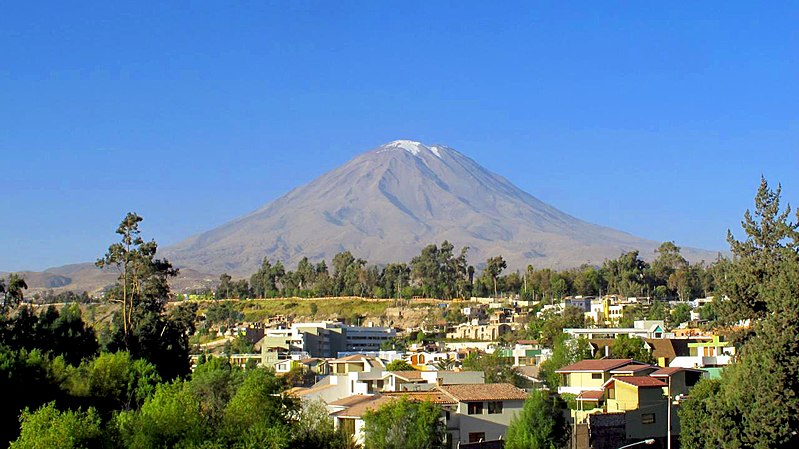
Arequipa is located under the shadow of three volcanoes: Misti, Chachani and Picchu Picchu. Being the first, the most emblematic and the only one that remains active. Its last eruption was in 1985. Currently it is permanently monitored by the Geophysical Institute of Peru (IGP).

It is possible to witness the volcano up close (up to the crater) through a tourist tour that is carried out partially or totally. Although the entire route demands an important physical demand, once at the top, the view of the surrounding Arequipa countryside is unmatched.

Birth of Characatos

When visiting Arequipa you will surely hear the word characato in many places. This term has been used for many years to refer to the inhabitants of both the city and the entire region. It tells the story that in the 16th century a group of men and women moved to the town of Sara Kato, a word made up of two Quechua words: Sara, which means corn, and Kato, sale or market. With the passage of time, the term Sara was derived to Chara.

Years later, the settlers traveled to the present north of Chile with the purpose of selling their merchandise, and when the inhabitants of the place asked them where they came from, they answered: “from Characato.” It was thus that over time this gentilicio that currently distinguishes Arequipa was born.

Juanita, the Inca Mummy

One of the greatest discoveries you can find in Arequipa is Juanita, a mummy found on the top of the Ampato volcano in 1996 belonging to the Inca culture (15th century). Currently it is possible to observe it closely at the Andean Sanctuaries Museum, one of the main cultural centers of the city. Its historical value is so important for Peru that it was declared a Cultural Heritage of the Nation.

The “ice girl”, as it is also called, surprised the world after its discovery due to its perfect state of conservation attributed to the natural mummification process that the body went through as a result of glacial freezing, which prevented its decomposition.