Hot Springs Colca

hot springs colca

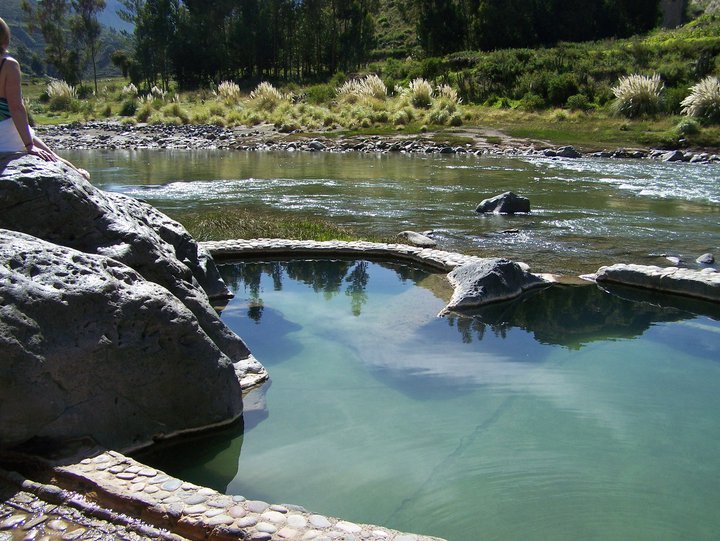
The Colca Valley, in the Arequipa region, is not only a magnificent setting for the enjoyment of nature, it also offers various places for health care, among which the thermal baths located in Chivay, Yanque, Callalli, Coporaque stand out. and Caylloma.

And it is that the province of Caylloma has become an excellent destination for lovers of thermal tourism, who can enjoy the benefits of thermal waters: therapies to take care of health, massages to forget the stress of day to day, or treatments to improve the condition of the skin; in short, a wide range of possibilities available to everyone.

Upon reaching the Colca Valley, the tourist can choose to visit public or private thermal baths. Among the public are the thermal baths La Calera in the district of Chivay, Chacapi in Yanque, Baños del Inca in Callalli and Coñeymayo in Caylloma.

La Calera and Chacapi

Located 5 kilometers from the town of Chivay, the La Calera thermal baths offer five pools heated to 38 degrees Celsius, which allow you to bathe in its waters and enjoy its healing properties on ailments related to bones, muscles and skin.

Calera waters contain 30% calcium, 19% zinc and 18% iron, elements that relieve muscle and bone pain.

Here tourists can also visit a small natural archaeological museum of Colca, walk on the suspension bridge and enjoy a magnificent view, as the complex is located on the edge of the Colca River.

The Chacapi thermal baths are located 2 kilometers from the main square of the Yanque district, its waters that reach maximum temperatures of up to 50 degrees Celsius also have healing properties for rheumatism, arthritis, among others. The spring is on the other side of the river and has 2 pools.

Both complexes offer topical services, massages, rental of clothes and food baths; so they are highly recommended. Admission to these places ranges from 1 to 15 soles, depending on the pool chosen.

Inca and Coñeymayo Thermal Baths

The Inca Thermal Baths, located at the entrance to the Callalli district, which can be reached after a 20-minute walk, have heated pools, the visitor can enjoy a pleasant moment of relaxation.

If the tourist visits the upper area of ​​the province, exactly the Caylloma district, located at an altitude of 4,310 m.a.s.l., they will be able to enjoy the thermal waters of Coñeymayo, which are located 1 kilometer from the town. This place has two heated pools.

Attractions of the Paracas National Reserve

Peru is a country with spectacular natural destinations like the Paracas National Reserve. Located just three hours south of Lima, where the desert meets the sea, this natural paradise offers a world of fascinating experiences to its visitors: sailing its islands in the company of sea lions, bathing on its quiet beaches or admiring its great biodiversity are some of the many activities that the reserve offers.

Spending a few days in this place provides unforgettable moments knowing all the wonderful attractions that you can find and enjoy. For this reason, we will tell you which are the most valuable pearls that this place hides.

Islas Ballestas (Ballestas Islands)

One hour from the coast are these pleasant islands. From the boat you will observe a spectacle that begins with the pelicans flying over the water. Then it will be the Humboldt penguins who will gather on the shore to welcome you, and, finally, hundreds of sea lions will greet along with their young roaring from the rocks.

Some of them even swim towards the boats to be caressed by people. Do not forget to carry a good camera to immortalize the moment.

La Mina, El Raspón and La Roja Beaches

Some of the most beautiful beaches of Peru are located in this reserve. La Mina and El Raspón are the most popular for visitors who arrive to bathe in its calm waters, enjoy the sun and rest on the sand. In addition, they are home to many birds that come to its shores.

In La Mina it is possible to practice diving and line fishing. In its surroundings, you can see a series of holes that in the past were coal mines. Very close to this beach is El Raspón. Because of its peaceful waves and its rock-free shore, it is an excellent destination to go with children.

Another important beach is La Roja, owner of a unique and dazzling landscape tinged with red due to the multiple volcanic eruptions that developed in the Pacific Ocean. While bathing is not allowed on this beach, it is a very good place to take pictures.

El Candelabro (The candelabrum)

Located on a sand cliff on the north coast of the reserve, this geoglyph is very similar to those found in the Nasca desert. It is 181 meters long, so it is possible to observe it from 20 km of distance. Its engraving is attributed to the Paracas culture and dates back to 200 years B. C.

It was declared Cultural Heritage of Peru and it is believed that it served to guide the ancient fishermen of this town during their activities, which shows the ingenuity and skill that characterized this civilization.

This geoglyph is very similar to those found in the Nasca desert.

Julio C. Tello museum

It is located inside the reserve. It received that name in homage to the Peruvian archaeologist who discovered the pre-Hispanic cultures Chavín and Paracas. This place exhibits more than a hundred pieces, including ceramics, textiles, tools and weapons that the Paracas culture used between the years 700 B.C. and 200 A.C. It also shows the famous ‘fardos funerarios’: large bundles covered by thin layers of embroidered cloth that wrapped a corpse in a fetal position.

This cultural space was recognized in 2018 as the Best New Museum in Latin America at the Leading Culture Destinations Awards, making it a mandatory stop to learn more about the history of the reserve and the ancient Peruvians.

The Andean Condor, Majesty on the Sky

Lord and master of the Andean sky, the condor amazes everyone who has the privilege to observe its majestic flight. Its impressive wings can reach three meters in length when extended, and its black-tinted plumage contrasting harmoniously with the white of its collar, produce a fascinating spectacle and a sensation of absolute freedom in the heights.

Currently, it is possible to witness the condor in all its splendor in the mountainous regions of Peru, such as in the Colca Valley in Arequipa, the Moyobamba Canyon in Ayacucho or in the Cusco community of Chonta, whose sanctuary of condors is frequently visited. It is also common to see the condor in some areas of the Peruvian coast where it takes advantage of the strong currents of marine winds.

A Deity for Inca culture


Historically considered a sacred bird in Peru, the Andean Condor has witnessed the origin and splendor of many ancient cultures and civilizations by acquiring a symbolic role in many of them. The condor has even been represented in ceramics, paintings and looms. The Incas were among its greatest admirers: they came to consider it a divinity in charge of uniting heaven with earth.

This mystical relationship is demonstrated in one of the main temples of the Machu Picchu sanctuary where the figure of the condor lies engraved in detail on a large stone. Historians assure that it is possible that this effigy was used as a sacrificial altar, since it was believed that condors were capable of raising the spirits of the dead to heaven.

According to the Andean worldview, this ancient species belongs to a sacred trinity along with the cougar and the snake, representing the sky, the earth and the world of the dead, respectively. Currently, many Andean communities in Peru celebrate traditional rituals known as the Yawar Fiesta or “blood festival”, where the condor is the main figure.

A Bird Filled with Charm and Curiosities


Among the most interesting qualities of condors is their loyalty. Once they find a partner, they are able to keep it for life. Another interesting fact is that they fulfill a valuable ecological function. Being a scavenger bird, the condor accelerates the descomposition process of dead species and thus prevents the proliferation of disease-causing microbes.

With a long pointed beak, the condor can easily tear food, while its eyes located at both ends of its head allow it to identify dead animals at a great distance.

The condor is also one of the species with the longest life span in the world, living up to 80 years. Its reproductive cycle reaches maturity at the age of eight and lays eggs every two years, making it an animal in danger of extinction due to its low rate of descent. That is why its care and conservation are a priority not only in Peru, but in the continent, where important measures are being taken by governments to guarantee the protection and quality of life of these majestic bird.

Horseback Riding in Colca

Typical Andean landscape surrounds one of the deepest canyons in the world: Colca Canyon. This is the perfect place for adventure as well as relaxing horseback riding, all under the king of these skies, the condor.

Horseback riding itineraries usually begin at the Cruz del Condor viewing point or Yanque town, from where it is possible to appreciate the full splendor of the canyon. And, of course, it is always possible that both horses and riders may be surprised along the way by a vigilant condor. This imposing natural setting, where you can find also the most beautiful fauna and flora.

Colca Canyon is one of those places in Peru that seem to have everything for enjoying a nice time and relax under the Andean sky.

Perou Voyage offers a 2 days tour horse riding in the Colca Canyon.

Adventure Activities in Colca Canyon

Colca offers a variety of incomparable activities for those in search of adventure activities: like hiking, biking, fishing, kayaking, etc.

First, there is the river, famous for its 300 rapids and for flowing through one of the deepest canyons on the world (4 160 meters). The best-known route runs from the small town of Chivay or Sibayo, the place where visitors can find accommodation with a local family or in a hotel or hostel, for around 40 kilometers, past Cabanaconde and on to Tapay.

And the adventure has only just started. This broad, imposing green valley surrounded by high mountains is home of the Andean Condor, which can be seen often, sometimes at close quarters, in the early mornings. And if you’re looking for more, then you can visit the ancient agricultural terracing, local thermal pools, or the nearby villages with their beautiful churches.

This magnificent natural setting also offers a number of adventure sports options, including trekking, mountain biking and rafting. It is also possible to explore the canyon on horseback, or descend on foot to admire its depths. You couldn’t ask for a more adventure-filled destination. This is Colca.

Live Inti Raymi From Cusco

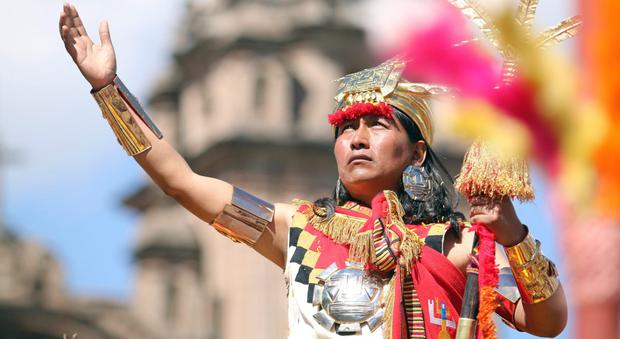
The ancestral ceremony that has the Sacsayhuamán esplanade as its main stage will be broadcast by open signal from the Peruvian State channel, which generates expectations worldwide. TVPerú will broadcast for the entire country and the world the staging of the millennial Inti Raymi Sun Festival.

It will be an unprecedented broadcast that begins at 11 AM. In the same way, the public will access to the signal through the web, Facebook live and the mobile application of TVPerú. The public also can comment on social networks with the hashtag # IntiRaymixTVPerú.


The cultural expression will also show the reactivation of Cusco as a safe travel destination whose main factor of development is tourism. The Inti Raymi will be a window to the world, everyone awaits at the international level this festival, this sacredness, and from that we have to relaunch tourism now that we already have greater protection of the population.

Finally, it was reported that the staging of the Inti Raymi will be on Thursday June 24 in its three stages, the Inca temple of Qoricancha, Plaza de Armas and Sacsayhuamán. More than 1,000 police officers will ensure safety. For that day, restrictions for pedestrian traffic are expected in order to avoid crowds.

Where to watch: https://www.tvperu.gob.pe/play

Photographer: Juan Sequeiros

Safe Travels: Peru, a Safe Tourist Destination

perusafetravelscovid19

To feel the magic of nature again, it is getting closer and closer! Peru, became the third safe tourist destination in Latin America facing the COVID19. The “Safe Travels” seal was delivered to the Cusco and national authorities in the citadel of Machupicchu in Cusco.

The WTTC created the “Safe Travels” Seal with the aim of contributing to the responsible and safe reopening of tourism, once the local authorities determine that the conditions exist for it. For this reason, Peru developed a set of protocols designed under the guidelines of the World Health Organization (WHO) and the Center for Disease Control and Prevention (CDC). This seal also has the backing of the World Tourism Organization (UNWTO) and more than 200 CEOs of the main business groups in the sector around the world.

The Tourism Minister of Peru Rocío Barrios highlighted the importance for Peru of having obtained the “Safe Travels” Seal, which shows that the Peruvian government is fully committed to the tourism sector and its reactivation. She added that the biosafety protocols issued by the Peruvian Executive and that involve the tourism sector have been evaluated by WTTC professionals and have their approval, this task has been fully accomplished, which allows our country to have security standards health in world-class tourism.

“Tourism is the economic activity that has suffered the greatest blow from the coronavirus pandemic. For this reason, for its reactivation, we want to offer visitors the best possible travel experience, with quality tourist destinations and services and complying with strict biosecurity protocols. We have the commitment of the public and private sector. We are going to return, it is time ”, said the minister. It is important to mention that from now on, each region of Peru may request the use of the seal from Mincetur and Cenfotur will evaluate its granting.

No schema found.

Peruvian Paso Horses

caballo de paso peruano

The Peruvian Paso Horses or peruvian horse is one of the most outstanding horse breeds of light saddle horse known for its smooth ride. This breed, typical of the regions of northern Peru, is protected by Decree Law 25919, promulgated on November 28, 1992.


In order to determine its history it is necessary to go back to what is believed to have been its predecessor, the Spanish horse from Andalusia, introduced to Peru during the time of the Conquest and the first stage of the Colony.
At first this breed was an indefatigable worker in the country, used as a work tool in agriculture and ranching. It served as a means of transport for riders on the haciendas of the northern coast of Peru. The subsequent stabilization of the breed took about four centuries, as a result of cross-breeding, selection and improvement.


Its morphology is characterized by being compact and muscular, wide and deep; elongated and strong limbs, a flat head and robust neck.
The thing that makes this breed different from other types of horses is the type of gait it employs to move. This is undoubtedly the most fascinating aspect.

Most horses move diagonally. In the case of the Paso horse it has a lateral gait. Nevertheless, there are different rhythms and speeds that give rise to different types or gaits, such as the catlike gait, the ambling gait, the staccato gait or the pounding gait. In these gaits the horse has a single and exceptional horizontal balance, which makes it pleasant to ride. Its smooth gait is undoubtedly one of the fundamental and best appreciated virtues of this breed.


The National Association of Peruvian Paso Breeders and Owners (ANCPCPP) is officially recognized nationally and internationally, responsible for the breeding, selection, evaluation, conservation and diffusion of our Paso horse.

Peruvian Gastronomy

Peruvian gastronomy and cuisine is considered among the best in the world, inherited its innovation, mix and flavors from Peru’s history. Its culinary fusion developed over a long process of cultural exchange between the Spanish, Africans, Chinese, Japanese and Italians,among others. The dishes became more and more varied as races mixed and migrants landed at the port of Callao.
This fusion gives rise to dishes like the unique anticucho de corazón (skewered cow heart), tacu-tacu stew and carapulcra, dishes which have African heritage. Nutritious pastas arrived along with Italian migrants, whose adaptations have resulted in traditional dishes like green or red pasta. Ceviche.
Peruvian’s emblematic dish, emerged from a fusion with Japanese cuisine.
Lastly, the trend of Novo-Andean cuisine boasts indigenous foods worthy of the most elegant settings, reclaiming the national flavor that is such an important part of our identity.


Peruvian Gastronomy and Cuisine

Peruvian Cuisine reflects the country’s history, with a variety that is unique in the world.
We find dishes that sweeten our palates in every corner of Peru.
The cuisines of Lima, the North Coast, the Amazon, Arequipa, the Andes and Novo-Andean cuisine are waiting for you.

Amazonian Cuisine


Food from the Peruvian Amazon not only entices with its exotic dishes, but also attracts travelers with its great variety of delicacies such as beef, poultry, fish, mutton and pork.

It also offers other examples of Pachamama’s abundance, such as majaz, with its lean meat and delicious flavor, or plantains, used as a main ingredient in many recipes.
And what better companion for this tantalizing food than the fresh juice of countless kinds of fruit, or other drinks, such as masato guaranteed to pamper the palate of our most indulged visitors.

Loreto, Ucayali, San Martín and Madre de Dios


Food from eastern Peru is exotic. The biodiversity of its resources seems infinite. Chonta or palm heart, harvested from palm trees, is an important element of Amazonian cooking and is used to make salads.
The plantain is another key ingredient in Amazonian food. It is used to prepare tacacho, which is often served with pork cracklings or dried pork.
Juanes, pieces of chicken packed in cooked rice and wrapped in bijao leaves to cook; roast picuro, a species similar to the guinea pig; apinchado, cuts of pork stewed with peanuts and corn; andpatarashca, fish steamed in leaves in hot coals, are all examples of the flavors proffered by Amazonian dishes.
Juanes, pieces of chicken packed in cooked rice and wrapped in banana leaves to be lightly roasted; roast picuro, a species similar to the guinea pig; apinchado, cuts of pork stewed with peanuts and corn; and patarashca, fish steamed in leaves in hot coals, are all examples of the varied flavors proffered by Amazonian dishes.
Noteworthy soups include inchicapi, chicken prepared with peanuts, cilantro and cassava, and carachama soup, made from fish and accompanied with plantains and cilantro.
When it comes to drinks, the Amazon offers remarkable fresh juices made from countless types of fruit, such as aguajina and cocona, as well as concoctions like masato or chuchuhuasi, which is alcoholic, or uvachado, a fermented grape beverage, and chapo, prepared with banana and/or milk.


Andean Cuisine

The Peruvian mountains are synonymous with variety. Andean cuisine abounds with stews, soups, meats, and exquisite desserts made from corn, milk and fruits.
Combining the high nutritional value of the Andean ingredients in a traditional earthen pot over a wood fire to create the most delicious dishes. Chicha corn beer was the traditional beverage of the ancient inhabitants of the Andes, and the tradition still lives on today.
Come to Peru and taste the Peruvian Gastronomy in the differents regions of Peru.

Myths About Machu Picchu

Between the cloud forests and mountainous landscapes, the ancient Inca citadel of Machu Picchu rises between the Andes. It is one of the most visited places of Peru and in the world. But the legends and myths about Machu Picchu do not always correspond to reality.

In the Sacred Valley of the Incas, the famous ruins captivate the interest of visitors from all over the planet. Many people wonder if everything they hear about “the lost city” is true.


Who discovered Machu Picchu?

It is said that the American explorer Hiram Bingham “discovered” the ancient citadel of the Incas. In July, 107 years of this event were celebrated.
According to many documented history books, Machu Picchu was discovered by Hiram Bingham in 1911. But Machu Picchu was discovered in 1902 by a breeder who lived on the banks of the Vilcanota River, Melchor Arteaga.
We can say that Bingham studied the place, but it is not for his discovery. When he arrived, there were people who talked him about the place.
However, he has organized an entire interdisciplinary expedition and has done a lot of research of the archaeological park of Machu Picchu.
Bingham also played an important role in drawing international attention to the archaeological site.


Why was it built on the top of a mountain?

Several legends explain why it was placed up there: the Inca Pachacutec had built after defeating his enemies, it was a sacred place of cults to the Sun.
Machu Picchu was built at more than 2,400 meters of altitude in a natural viewpoint of the Peruvian Andes and the Amazon basin. They may have chosen this location because of its geographical importance.
Possibbly the Incas, before building the citadel, were doing a research. For them, the hills are “Apus” (gods), and the district of Machu Picchu is surrounded by three Apus, protected by these mountains.
In addition, it was in a high place and they were in constant confrontation with the Chanca culture. So they built in the high areas to better defend themselves.
Recent studies have shown that Machu Picchu was the place from which the Incas administered their empire and it was therefore logical that it was at the highest point in terms of military strategy.


How did Machu Picchu stay so well preserved for so long?


The Inca walls and buildings of Machu Picchu are practically intact, with the exception of the roofs, which have disappeared over the years and because of heavy rains.


Five centuries have passed, how did Machu Picchu manage to be so well preserved?


The construction of Machu Picchu is a testament to the remarkable techniques used by the Incas.
The cultivated terraces (a vast network of stepped platforms) were very important for their preservation because they served as a drainage system, so the whole citadel remained intact and also thanks to the light tilt and shape of walls.
Machu Picchu even survived two earthquakes in Cusco (1650 and 1950) that destroyed colonial buildings, but not Inca.
But there is another reason: “When the Spaniards arrived at an archaeological site, their intention was to destroy, but the Spaniards did not arrive at Machu Picchu, which is why it remained so well preserved.


The Spanish could not enter to Machu Picchu with their mules or their horses, because the Emperor Manco Inca had destroyed all the roads that led to Machu Picchu, or at least the parts most difficult to cross when he retired in 1539.
In all these years, giant trees grew up, so Bingham found an abandoned village that remained intact behind these trees. This vegetation and its isolation “guaranteed the preservation of its architecture.


Is Machu Picchu in danger of disappearing?

Some press reports say that climate change and excessive tourism could make Machu Picchu disappear and “deteriorate at a rate never seen before”.
The people of Cusco, the Peruvian state and the world have the responsibility of keeping alive this world heritage. Not only to generate a beautiful speech, but also so that it is always present for future generations and that it makes no sense to ask this question.
In addition, UNESCO specialist, said that the Peruvian authorities “are responsible for the protection of Machu Picchu and are continually working to mitigate the potential impacts of tourism, natural disasters and the effects of climate change. “.
Although it is in an excellent state of conservation, it is essential to put in place an adequate protection policy in the medium and long term to counter these threats.
Two years ago, a group of Korean geologists came in and checked the movement points and the sliding of the walls. They said there was a detachment and a separation of 0.5 millimeter because of the number of tourists who visited it and constant rains, so they recommended that access be limited to tourists in certain places. That’s the reason why in the Intihuatana area, where you can only take the picture and move quickly.